The question of whether Artificial Intelligence can replace human jobs has become one of the most important topics in the modern world. Technology is developing rapidly, and businesses are using intelligent machines, computer programs, and automated systems to complete tasks that once required human workers. From customer service and banking to healthcare and education, automation is changing the way people work and earn money. 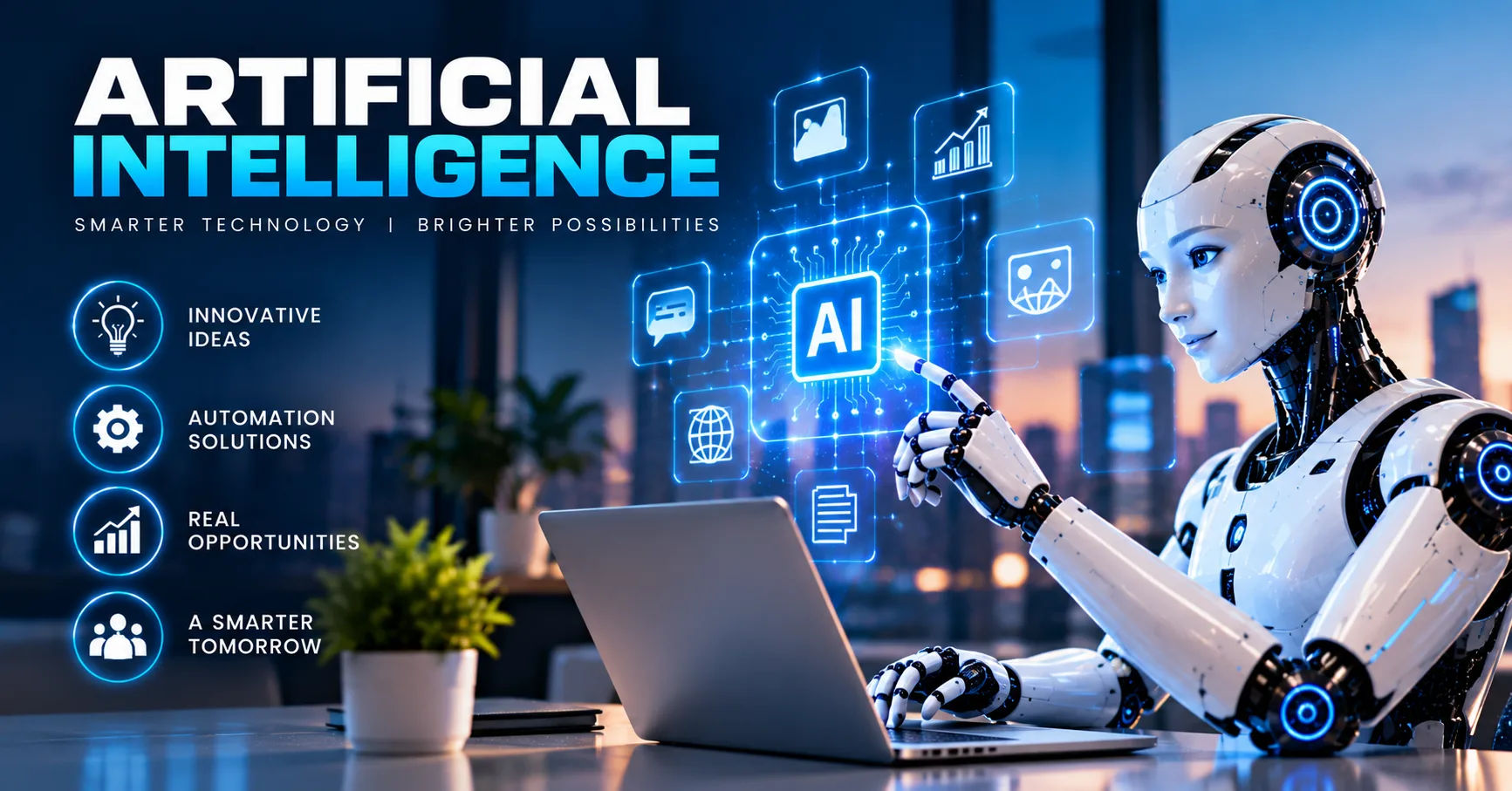 For many people, these changes create both excitement and fear. Some believe that machines will eventually perform most jobs more efficiently than humans, while others argue that technology will create new opportunities and improve working conditions. The truth lies somewhere between these two views.
Artificial Intelligence is already transforming workplaces by helping businesses save time, reduce costs, and increase productivity. However, its growing influence does not automatically mean that human workers will become unnecessary. The effects depend on the type of job, the skills required, and how organizations choose to use new technology.
Understanding this issue is important for students, employees, business owners, and anyone preparing for the future. By examining the benefits, risks, and limitations of intelligent technology, we can better understand whether machines will replace human workers or become valuable partners in the workplace.
Artificial Intelligence in the Workplace
Artificial intelligence AIOwl refers to computer systems designed to perform tasks that normally require human intelligence. These tasks may include understanding language, recognizing images, analyzing information, solving problems, and making predictions.
Modern systems can process large amounts of information in seconds. They can also learn patterns from data and use those patterns to produce useful results. Examples include virtual assistants, recommendation syste ms, automated customer service tools, and software that helps doctors identify diseases.
Businesses use these technologies to handle repetitive work, organize information, and support decision-making. For example, a bank may use automated software to identify suspicious transactions, while an online store may use intelligent systems to recommend products to customers.
However, these systems do not possess human understanding, emotions, or personal experiences in the same way people do. They can make mistakes, misunderstand situations, and produce inaccurate information. Human supervision therefore remains important, particularly when decisions affect people's safety, rights, or financial security.
How Artificial Intelligence Is Changing Human Jobs
The relationship between technology and employment is more complicated than simply replacing workers with machines. In many cases, technology changes the tasks people perform rather than eliminating their entire occupations.
Automation of Repetitive Tasks
One of the biggest advantages of intelligent technology is its ability to complete repetitive tasks quickly and consistently. These tasks may include entering data, sorting documents, processing invoices, checking inventory, and answering common customer questions.
For example, a company that previously employed several workers to enter information manually may introduce software that performs much of this work automatically. The company might need fewer data-entry workers, but it may also need employees who can manage the software, review its results, and solve problems.
Automation can reduce human error and free workers to concentrate on more complicated responsibilities. Nevertheless, employees whose work consists mainly of predictable, repetitive activities may face a greater risk of job displacement.
Improving Productivity and Efficiency
Intelligent systems can help employees complete their work in less time. Writers can use them to organize research, accountants can analyze financial records more quickly, and engineers can test designs using advanced computer tools.
This increased efficiency can help companies produce more goods and services without increasing their costs at the same rate. In some situations, businesses may expand because they become more competitive, creating additional demand for workers.
However, higher productivity does not guarantee more jobs. Some businesses may increase profits while reducing their workforce. The overall effect depends on consumer demand, business decisions, economic conditions, and whether new opportunities emerge.
Changing the Skills Employers Need
As workplaces become more technologically advanced, employers increasingly value workers who can use digital tools effectively. Employees may need to understand data, operate automated systems, communicate clearly, and solve problems that machines cannot handle independently.
Traditional skills remain important, but they may need to be combined with technological knowledge. For example, a marketing professional may benefit from understanding customer behavior while also learning how to use automated research and content tools.
Workers who continuously develop their skills are generally better prepared to adapt when their responsibilities change.
Which Jobs Are Most Likely to Be Replaced?
Not every occupation faces the same level of risk. Some jobs involve predictable tasks that can be automated relatively easily, while others require physical flexibility, emotional understanding, complex judgment, or personal interaction.
Data Entry and Administrative Work
Data-entry workers, document processors, and some administrative employees may experience significant changes because many of their tasks follow clear rules.
Software can organize records, extract information from documents, schedule appointments, and prepare routine reports. As these tools improve, businesses may need fewer employees for basic administrative activities.
However, administrative professionals who coordinate teams, manage sensitive information, resolve unexpected problems, and communicate with clients may continue to provide substantial value.
Customer Service Representatives
Automated chat systems can answer common questions, explain company policies, track orders, and guide customers through simple procedures. These systems are available around the clock and can handle many requests simultaneously.
This may reduce demand for workers who only respond to routine inquiries. Nevertheless, complicated complaints, emotional conversations, and unusual customer problems often require human judgment and empathy.
Many businesses are therefore likely to combine automated support with human representatives who handle more difficult cases.
Manufacturing and Warehouse Workers
Factories have used robots and automated equipment for many years. Modern systems can assemble products, inspect materials, move packages, and monitor production lines.
These technologies can improve safety and consistency, particularly in dangerous environments. However, they can also reduce demand for workers who perform repetitive physical tasks.
At the same time, companies need technicians, engineers, maintenance workers, and supervisors to operate and repair automated equipment. Workers may need additional training to move into these positions.
Transportation and Logistics
Technology is changing how goods are stored, delivered, and transported. Route-planning systems help drivers save time, while automated warehouse equipment can move products with limited human assistance.
Self-driving vehicles may eventually affect some transportation jobs, but widespread replacement depends on safety, infrastructure, regulations, cost, and public acceptance.
For the foreseeable future, many transportation roles will continue to require human attention, particularly in unpredictable environments.
Basic Content Production
Some writing, translation, image editing, and marketing tasks can now be completed with automated tools. Businesses may use these systems to produce initial drafts, summarize documents, or generate ideas.
This can affect workers whose responsibilities involve producing large amounts of standardized content. However, high-quality creative work also requires original thinking, cultural awareness, fact-checking, and an understanding of an audience.
Human professionals who combine creativity with technological skills may find new ways to work more efficiently and deliver better results.
Which Jobs Are Less Likely to Be Fully Replaced?
Although technology can perform many useful tasks, certain occupations remain difficult to automate completely. These jobs often involve human relationships, unpredictable situations, physical dexterity, or decisions requiring considerable responsibility.
Healthcare Professionals
Doctors, nurses, therapists, and other healthcare workers provide more than information. They communicate with patients, understand personal circumstances, make difficult decisions, and offer emotional support.
Intelligent systems can assist with medical imaging, patient monitoring, research, and administrative work. They may help healthcare professionals identify potential problems earlier and manage information more effectively.
However, patients still need human care, professional accountability, and informed medical judgment. Technology is more likely to support many healthcare workers than to eliminate the need for them entirely.
Teachers and Educators
Teachers do much more than explain academic subjects. They motivate students, recognize learning difficulties, manage classrooms, and help young people develop social and critical-thinking skills.
Automated learning platforms can provide practice exercises, explain concepts, and adjust learning materials to individual needs. These tools can make education more accessible.
Nevertheless, students benefit from encouragement, personal feedback, discussion, and the guidance of experienced educators. Teachers who learn to use technology effectively may improve their teaching rather than become unnecessary.
Skilled Tradespeople
Electricians, plumbers, mechanics, construction workers, and repair technicians often work in environments that differ from one task to another. They must identify unexpected problems, handle specialized tools, and adapt to physical conditions.
Robots can perform certain tasks in controlled settings, but working inside an old building, repairing unusual equipment, or diagnosing an unexpected fault can be difficult to automate.
For this reason, many skilled trades may remain valuable even as technology changes the way their work is performed.
Leadership and Human-Centered Professions
Managers, counselors, negotiators, social workers, and community leaders often depend on trust, communication, ethical judgment, and an understanding of human behavior.
Computer systems can analyze information and suggest possible decisions, but people remain responsible for considering social consequences, resolving conflicts, and building relationships.
These occupations may change as new tools become available, yet their human-centered responsibilities make complete replacement more challenging.
Can Artificial Intelligence Create New Jobs?
The discussion about automation often focuses on job losses, but technological progress can also create new employment opportunities.
When businesses adopt new systems, they may require software developers, data analysts, cybersecurity specialists, robotics technicians, system administrators, and technology trainers. Some of these occupations were uncommon or did not exist before modern digital technologies became widespread.
Companies may also create positions related to checking automated decisions, protecting customer information, improving system reliability, and ensuring that technology is used responsibly.
New industries can emerge as technology makes previously expensive services more affordable. When businesses reach more customers or develop new products, they may need additional employees in sales, support, operations, and management.
However, the creation of new jobs does not automatically compensate every worker who loses an existing position. A displaced employee may not have the education, experience, or financial resources needed to enter a new occupation.
The challenge is therefore not only to create employment but also to help people move from declining roles into growing fields.
The Main Benefits of Artificial Intelligence for Workers
Reduced Workload
Automation can take over repetitive and time-consuming responsibilities, allowing employees to focus on more meaningful work. Workers may spend less time organizing paperwork and more time solving problems, helping customers, or developing new ideas.
When implemented responsibly, this can reduce frustration and improve workplace productivity.
Better Access to Information
Intelligent tools can quickly summarize documents, identify patterns, and help employees explore possible solutions. This is especially useful in fields where professionals must review large amounts of information before making decisions.
Workers can use these tools to support their judgment, provided they verify important results.
Improved Workplace Safety
Automated machines can perform dangerous tasks in factories, mines, warehouses, and other high-risk environments. Monitoring systems can also identify unusual conditions and warn workers about potential hazards.
These applications can reduce exposure to physical dangers when equipment is properly designed, maintained, and supervised.
Opportunities for Small Businesses
Small companies may use affordable digital tools to perform tasks that once required large teams. For example, a small business owner may use automated scheduling, customer support, and financial software to manage daily operations.
This can help smaller businesses compete with larger organizations and potentially create new employment opportunities as they grow.
The Disadvantages and Risks of Workplace Automation
Job Displacement and Unemployment
The most serious concern is that some workers may lose their jobs when businesses automate their responsibilities. Employees who depend on routine tasks may face particular difficulties if alternative positions are unavailable.
Long periods of unemployment can affect household income, confidence, and financial stability. Communities that rely heavily on a single industry may also struggle when large employers introduce extensive automation.
Growing Economic Inequality
The benefits of technological progress may not be shared equally. Business owners and highly skilled professionals may receive significant financial rewards, while lower-paid workers experience reduced job security.
If access to training and new employment opportunities remains unequal, the gap between different income groups could widen.
Governments, employers, and educational institutions must therefore consider how to distribute the benefits of productivity more fairly.
Privacy and Workplace Monitoring
Some employers use digital systems to track employee performance, working hours, productivity, and behavior. Although monitoring can help identify operational problems, excessive surveillance may reduce trust and create unnecessary pressure.
Organizations should collect only appropriate information, explain how it will be used, and protect workers' privacy.
Overdependence on Technology
Relying too heavily on automated systems can create problems when those systems fail or provide incorrect results. Employees may also lose important skills if they stop practicing tasks that software usually handles.
Businesses should maintain human oversight, prepare backup procedures, and ensure that employees understand how to recognize and correct mistakes.
Ethical Concerns and Bias
Automated hiring and performance systems may produce unfair results if they rely on biased data or poorly designed rules. For example, a recruitment tool could disadvantage qualified applicants if its training data reflects historical discrimination.
Human review, transparent procedures, regular testing, and clear accountability are necessary to reduce these risks.
How Workers Can Prepare for the Future
The changing workplace makes continuous learning increasingly important. Workers do not need to become technology experts in every field, but they should understand how new tools affect their occupations.
Develop Digital Skills
Learning to use common workplace software, data tools, and relevant automated applications can help employees remain competitive. Professionals should focus on technologies that support their particular industry rather than attempting to learn everything at once.
Students can begin by practicing digital research, spreadsheets, presentations, and responsible use of intelligent tools.
Strengthen Human Skills
Communication, teamwork, empathy, leadership, creativity, and critical thinking are valuable because they help people handle situations that require more than routine information processing.
These skills are useful across many occupations and can complement technical knowledge.
For example, an employee who understands both customer needs and digital systems may be better prepared to improve a company's service.
Commit to Lifelong Learning
Education should not end when a person graduates. Online courses, professional certificates, workplace training, and practical projects can help workers update their knowledge.
Employees should regularly review the skills required in their industries and identify areas where additional training could improve their opportunities.
Learn to Work Alongside Intelligent Tools
Instead of treating technology only as a competitor, workers can learn to use it as an assistant. A designer might use automated tools to explore ideas, while a financial analyst might use software to identify patterns before checking the results independently.
The goal is to combine technological speed with human judgment, creativity, and responsibility.
Stay Flexible and Open to Change
Some occupations will shrink, while others will expand or develop entirely new responsibilities. Workers who remain open to different roles, additional training, and new working methods may find it easier to adapt.
Flexibility does not mean accepting every technological change without question. It means understanding the changes, preparing for them, and making informed career decisions.
What Governments and Businesses Should Do
Preparing for technological change is not solely an individual responsibility. Employers, governments, and educational institutions also have important roles to play.
Businesses should provide training when introducing new systems and consider whether employees can move into different positions before making large workforce reductions. Clear communication can help workers understand how their responsibilities may change.
Governments can support affordable education, job-placement services, career counseling, and programs that help displaced workers develop new skills. Policies may also be needed to protect workers' rights and ensure that productivity gains contribute to broader economic well-being.
Schools and universities should teach students how to solve problems, evaluate information, communicate effectively, and use modern technologies responsibly. Education systems that emphasize memorization alone may not prepare students adequately for a changing labor market.
Finally, organizations should introduce automation thoughtfully. Decisions should consider not only financial savings but also safety, fairness, privacy, service quality, and the long-term effects on employees and communities.
Conclusion
Can Artificial Intelligence replace human jobs? The answer is yes, in some cases, but it is unlikely to replace all human workers or make every occupation unnecessary. The impact will vary according to the tasks involved, the pace of technological development, and the decisions made by businesses and governments.
Jobs built around repetitive, predictable activities are more vulnerable to automation. Data entry, routine administrative work, basic customer support, and certain manufacturing tasks may experience substantial changes. In contrast, occupations involving empathy, complex judgment, creativity, physical adaptability, and personal relationships can be more difficult to automate completely.
It is equally important to recognize that technology can create employment opportunities. New industries require people to develop, maintain, supervise, and improve automated systems. Businesses may also expand when technology helps them offer better products and services at lower costs.
Nevertheless, new opportunities do not guarantee that every displaced worker will find suitable employment. Workers may need training, financial support, and access to education to move successfully into different occupations. Without these resources, technological progress could increase inequality and economic insecurity.
The best response is to prepare rather than panic. Students should develop digital literacy alongside communication, creativity, and critical thinking. Employees should pursue continuous learning, while employers should invest in their workforce and introduce new technologies responsibly. Governments and educational institutions should help people access the training and protection they need.
Ultimately, the future of work will depend not only on what machines can do but also on how society chooses to use them. Technology can improve productivity, reduce dangerous tasks, and support better decisions, but its benefits must be balanced against its risks.
Human workers bring experience, responsibility, emotional understanding, and the ability to navigate complicated social situations. When these strengths are combined with effective technological tools, people and machines can achieve results that neither could accomplish as effectively alone.
Rather than asking only whether machines will take our jobs, we should ask how we can prepare for a world in which work continues to evolve. With thoughtful planning, accessible education, and responsible innovation, society can reduce the harmful effects of automation while creating opportunities for a more productive and adaptable workforce.
The future does not have to be a competition between humans and machines. It can be a partnership in which technology handles suitable tasks and people concentrate on the judgment, creativity, relationships, and decisions that make human work valuable.