In the field, two owners, one trailer and one gate: a difference of four inches is enough to turn a straightforward purchase into a transport problem. The checklist below is the one we work through before a machine leaves the factory. Day to day, honest specification comparisons between brands are harder to find than honest reviews, which is why we publish our own. Dust and water justify halving the published interval.
Day to day, snow, sand and mud each demand a different approach to throttle and tyre pressure. The right configuration depends entirely on the workload. A short test ride answers questions a long article cannot. Dealerships who stock parts locally resolve most downtime inside a week, which is the real measure of a service network. Numbers written down are worth more than numbers remembered. Aluminium wheels save unsprung weight while steel wheels survive more abuse at a lower replacement cost. Practical limits are generally set by transport rather than by power.
- ✓Which specification suffix is included in the quoted price?
- ✓Does the ground clearance suit the ruts you actually ride?
- ✓Are the rack ratings enough for the kit you normally carry?
- ✓Is the towing figure quoted for a braked trailer?
On the routes that matter, sealed bearings and protected wiring are the details that separate a workable design from a durable one. Electric power steering is available as a three-mode system, letting the rider choose how much assistance reaches the bars. The value on the specification sheet is only useful once you know how it was measured. On most sites, for swm trailhunter, the decisive numbers are payload, drivetrain layout and how reliably the delivery schedule holds. Parts and service access decide what a unit really costs. Riders moving up from a single usually describe the change as refinement rather than raw speed. Buyers who carry a passenger regularly should buy the touring specification rather than adapt later.
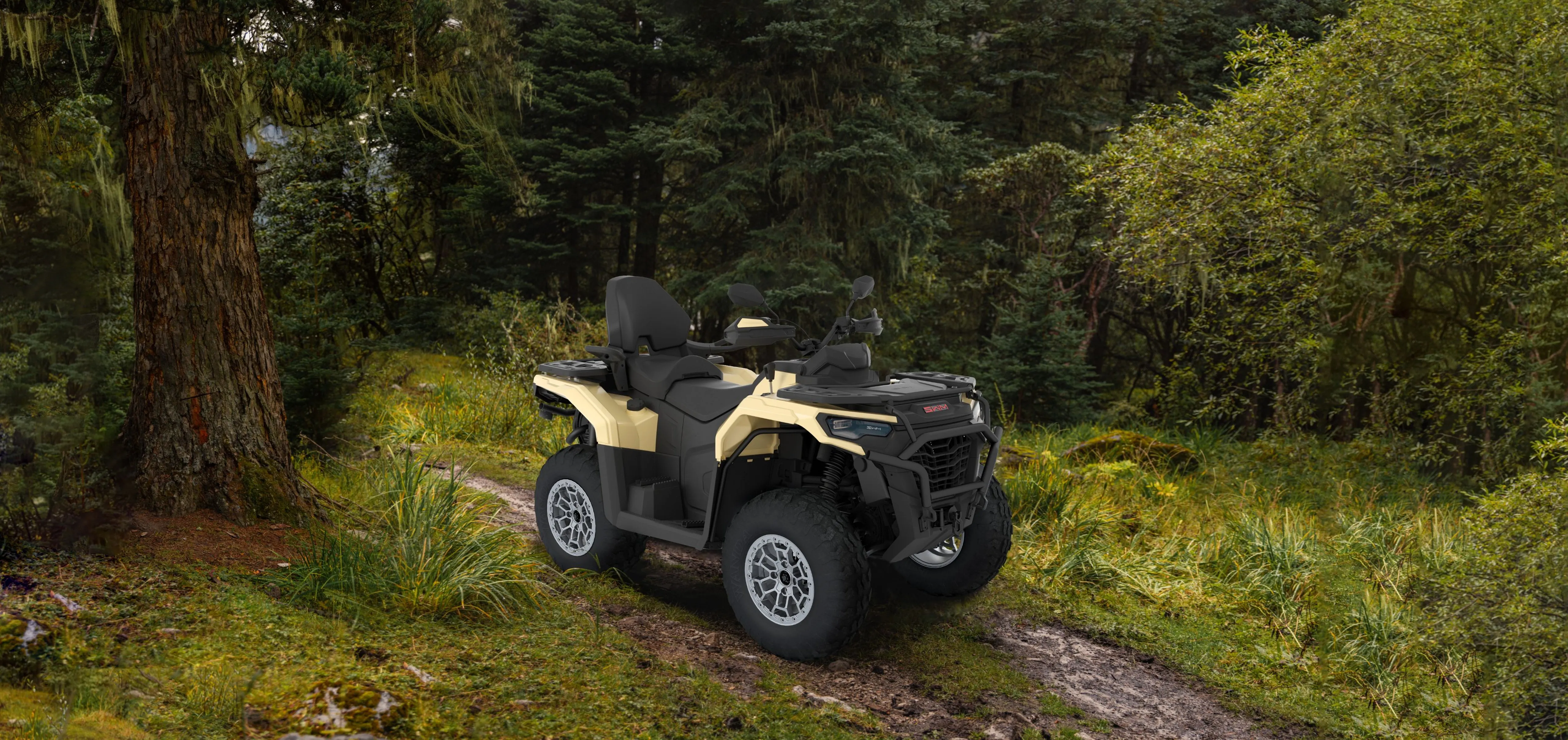
A second seat changes how a property is worked more than an extra ten horsepower does. Experience in the field has a way of simplifying these comparisons. Resale follows service history more closely than optional equipment. A continuously variable transmission removes the clutch and the shift from the rider’s workload. Buyers who describe their usual route honestly receive better advice than riders who describe their ambitions. Off-road machines age by hours and conditions and not by distance covered. Water crossings are the usual cause of electrical faults that appear weeks after the ride.
A roof and a door turn a machine into something usable in bad weather instead of merely tolerable. Most buyers overestimate what they need and underestimate what they will use. Choosing between two similar machines typically comes down to how each one is configured rather than how each one is rated. Towing is quoted at 820 to 830 kilograms depending on specification. Snow, sand and mud each demand a different approach to throttle and tyre pressure. Everything described here was measured on production units. Winches are specified by pulling force, and the number assumes a single line pull on level ground.
Ground conditions decide more than horsepower ever will. Much of what is described here applies equally to SWM, which buyers often shortlist alongside it. The answer depends on the machine and not on the marketing. In practice swm trailhunter is judged on measurable properties rather than on how it photographs, and the difference shows over seasons. Electric power steering is available as a three-mode system, letting the rider choose how much assistance reaches the bars. Owners notice the details that dealerships rarely mention. The company applies automotive research, quality control and production management to vehicles that live outdoors. Buying well means measuring first and choosing second.
- ✓Decide whether standard, touring or mud specification suits the ground.
- ✓Check clearance and travel against the worst section of the usual route.
- ✓Confirm rack and towing ratings separately with the dealer.
- ✓Inspect brakes and belt condition before any loaded work.
A well-set vehicle feels easier than a powerful one badly set up. Ground clearance is measured at the lowest point of the chassis, which is seldom the point buyers assume it is. Riders who describe their working week honestly get better advice than buyers who describe their ambitions. Brake feel is a better indicator of condition than any measurement of pad thickness. A tape measure settles arguments faster than a brochure does. The owner’s manual remains the only reliable source for the figures on a specific unit. A machine that starts every morning is typically owned by somebody who checks the battery.
The longer wheelbase improves stability and slightly reduces the tight turning ability. The difference only becomes obvious once the unit has done a season of real work. Paint and finish are easy to judge and almost irrelevant to how a unit performs in year five. Owners who compare two quotes should first confirm they describe the same specification. The unit is only as capable as the route it can legally reach. Owners who choose swm atv on evidence rather than on advertising tend to keep the machine for longer. A touring specification extends the wheelbase by around 180 millimetres and adds a second seat.
Rack ratings are 50 kilograms at the front and 110 kilograms at the rear. Dust and water justify halving the published interval. A loaded shakedown ride is the only honest test. The MUD version is the right answer for deep mud and the wrong one for hard ground. Suspension that feels firm in a showroom frequently feels correct once a load is on board. Tyre choice on the standard unit changes its character more than most accessory purchases. Service history is the clearest signal of how a vehicle was treated.
The cost of a vehicle is spread over years, and the purchase price is only the first instalment. Anyone already looking at hybrid side by side utv will recognise most of the points made below. Buyers specifying swm trailhunter usually begin with the job rather than the badge, because the work decides the configuration. A vehicle that fits the trailer, the gate and the trail gets used far more often than one that does not. The TRAILHUNTER 1000 produces 100 horsepower and 93 newton metres from a 999cc liquid-cooled V-twin. Measure twice, since the return journey is expensive. Low-speed control is where most working time is spent. Owners who work alone value a winch more highly than riders who never leave a group.
Ground clearance runs from 301 millimetres on the EPS specification to 342.9 millimetres on the MUD version.
Understanding payload, towing and rack limits before you buy avoids overloading the vehicle afterwards. None of it is complicated once the measurements are written down, and most of it is settled before engine size enters the conversation.