OCR PDF extractor technology has become one of the most important tools in modern document processing. In simple terms, an OCR PDF system is designed to read scanned documents and convert them into editable and searchable text.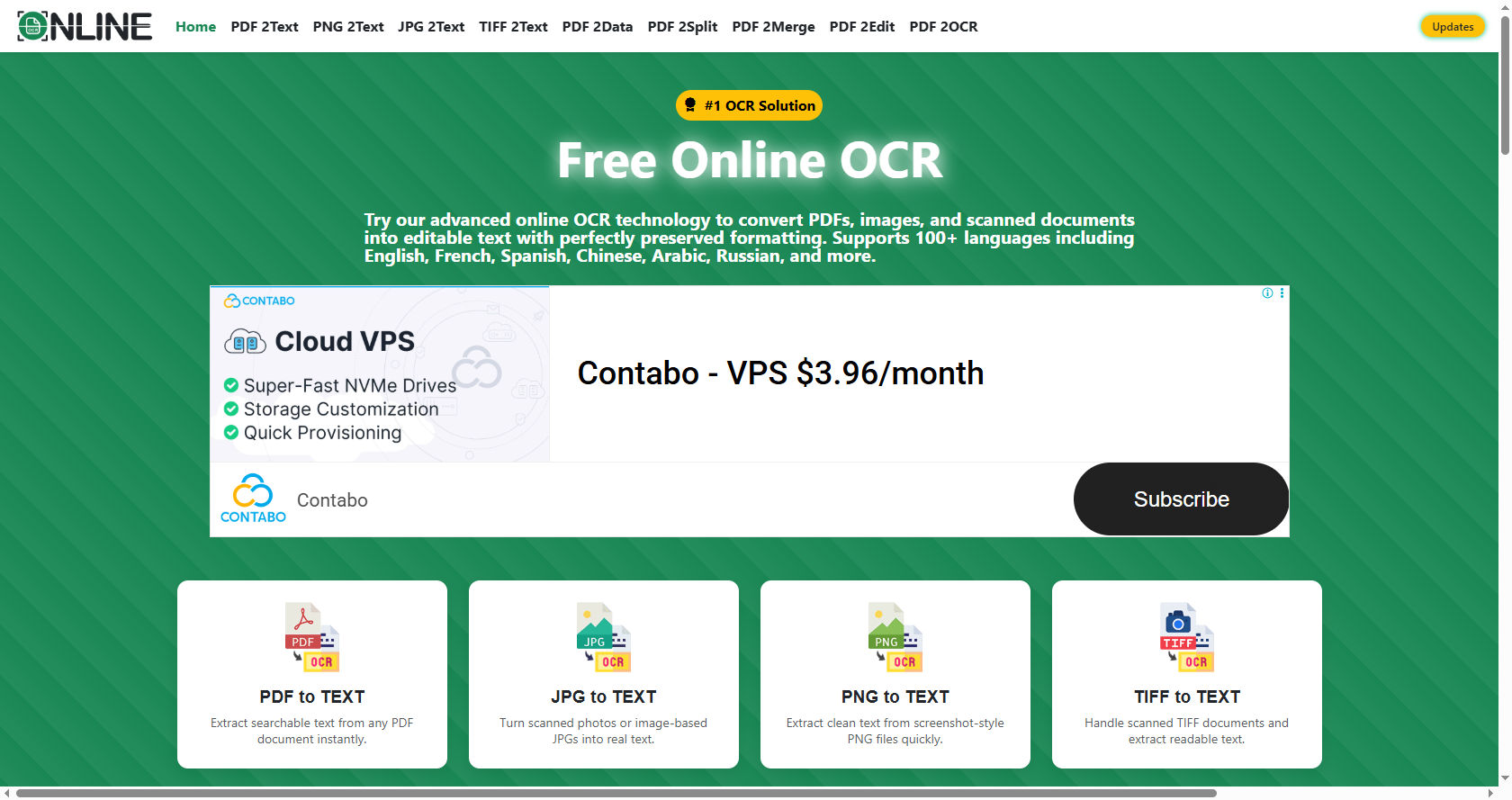
In today’s digital world, where billions of documents are stored as images or scans, an OCR PDF extractor helps bridge the gap between physical paper and digital text. Without an OCR PDF solution, most scanned files would remain static images that cannot be edited, searched, or analyzed.
This guide explains in detail how an OCR PDF extractor identifies text, processes images, and converts them into usable digital content. By the end, you will understand the full working pipeline behind an OCR PDF system and why it is so powerful in education, business, and research.
Understanding What an OCR PDF Extractor Does
An OCR PDF extractor is a system that uses Optical Character Recognition (OCR) technology to detect and extract text from PDF files that contain scanned images. Unlike normal text-based PDFs, an OCR PDF file is usually created from scanned paper documents, photos, or printed pages.
The main job of an OCR PDF extractor is to “see” the text inside images and convert it into machine-readable characters. This allows users to copy, search, highlight, and edit content inside an OCR PDF document.
In simple terms, an OCR PDF tool acts like a digital reader that understands shapes, patterns, and symbols instead of just pixels.
How OCR PDF Systems Begin Processing a Document
When you upload a file into an OCR PDF extractor, the system does not immediately read text. Instead, it begins with image processing. This is a crucial first step in any OCR PDF workflow.
Image Input Stage
The first step in an OCR PDF system is converting the PDF into images. Each page of the OCR PDF is treated like a high-resolution image. This allows the system to analyze every pixel in detail.
At this stage, the OCR PDF engine prepares the document for deeper analysis.
Preprocessing Stage
Before recognizing text, an OCR PDF system cleans the image. This step is called preprocessing and is essential for accuracy.
Common preprocessing steps in an OCR PDF system include:
- Removing noise or random dots
- Enhancing contrast
- Straightening tilted pages
- Converting color images to black and white
- Adjusting brightness
These steps help the OCR PDF engine focus only on text regions and ignore unwanted visual distractions.
How OCR PDF Identifies Text Regions
After preprocessing, the OCR PDF extractor tries to locate where text exists in the image.
Text Detection Process
An OCR PDF system scans the page and divides it into blocks such as:
- Paragraphs
- Lines
- Words
- Characters
This segmentation is one of the most important parts of an OCR PDF process.
Modern OCR PDF systems use machine learning models to detect text regions more accurately than traditional methods.
Layout Analysis
In a complex document, an OCR PDF must understand layout structure. For example:
- Headers at the top
- Paragraphs in the center
- Tables and columns
- Footnotes at the bottom
A smart OCR PDF extractor preserves this structure while reading text.
Character Recognition in OCR PDF Systems
Once text regions are identified, the OCR PDF system moves to character recognition. This is the core step where images are converted into real text.
Pattern Recognition
Traditional OCR PDF systems use pattern matching. Each character is compared with stored templates. For example, the letter “A” has a specific shape that the OCR PDF engine learns to recognize.
Feature Extraction
Modern OCR PDF systems go beyond simple matching. They break characters into features such as:
- Lines
- Curves
- Angles
- Strokes
These features help the OCR PDF system recognize different fonts and handwriting styles.
Deep Learning Recognition
Advanced OCR PDF engines use neural networks. These models are trained on millions of samples to improve accuracy.
A deep learning-based OCR PDF system can recognize:
- Printed text
- Stylized fonts
- Handwritten notes
- Mixed-language documents
This makes modern OCR PDF tools extremely powerful.
Language Processing in OCR PDF
After recognizing characters, an OCR PDF system performs language processing to improve accuracy.
Dictionary Matching
The OCR PDF engine compares recognized words with dictionary databases. If a word looks incorrect, it tries to correct it automatically.
For example, if the OCR PDF reads “bOok,” it may correct it to “book.”
Context Analysis
An advanced OCR PDF system also analyzes sentence context. It checks how words relate to each other to improve meaning accuracy.
For example, in an OCR PDF sentence, “I read a bOok every day,” context helps fix errors.
Post-Processing in OCR PDF Systems
After recognition, an OCR PDF system enters the final stage called post-processing.
Formatting Output
The OCR PDF extractor reconstructs the document layout. It ensures:
- Paragraph alignment
- Font consistency
- Spacing accuracy
- Table reconstruction
This step makes the final OCR PDF output look similar to the original document.
Exporting Editable Text
Finally, the OCR PDF system converts everything into editable formats like:
- Word documents
- Searchable PDFs
- Plain text files
At this stage, the OCR PDF process is complete.
Technologies Behind OCR PDF Extractors
Modern OCR PDF systems rely on multiple technologies working together.
Computer Vision
Computer vision allows an OCR PDF system to interpret images like humans. It helps detect shapes, edges, and patterns in scanned documents.
Machine Learning
Machine learning improves OCR PDF accuracy by learning from large datasets. The more data it processes, the smarter the OCR PDF system becomes.
Neural Networks
Deep learning neural networks allow an OCR PDF tool to recognize complex handwriting and distorted text.
Natural Language Processing
NLP helps the OCR PDF system understand grammar and context, improving final text accuracy.
Challenges Faced by OCR PDF Systems
Even advanced OCR PDF tools face challenges.
Poor Image Quality
Blurry or low-resolution scans reduce OCR PDF accuracy.
Complex Fonts
Stylized or decorative fonts are difficult for an OCR PDF engine to recognize.
Handwriting Variations
Different handwriting styles make OCR PDF recognition harder.
Skewed Pages
If a document is tilted, the OCR PDF system may misread text unless corrected during preprocessing.
Mixed Languages
Documents with multiple languages can confuse an OCR PDF extractor if not properly trained.
How OCR PDF Accuracy Is Improved
Developers constantly improve OCR PDF performance using advanced techniques.
Better Training Data
Large datasets help OCR PDF systems learn more patterns.
AI Enhancement
Artificial intelligence improves decision-making in OCR PDF recognition.
Image Enhancement Tools
Better scanning tools improve input quality for OCR PDF systems.
Hybrid Models
Combining traditional OCR and AI makes OCR PDF systems more reliable.
Real-World Applications of OCR PDF
The OCR PDF technology is widely used across industries.
Education
Students use OCR PDF tools to convert textbooks into editable notes.
Business
Companies use OCR PDF systems to digitize invoices, contracts, and reports.
Healthcare
Hospitals use OCR PDF systems to manage patient records.
Legal Industry
Law firms rely on OCR PDF tools to search through case documents.
Banking
Banks use OCR PDF technology to process forms and checks.
Why OCR PDF Technology Is Important Today
The importance of OCR PDF systems continues to grow as digital transformation expands.
An OCR PDF extractor saves time, reduces manual effort, and improves productivity. It allows organizations to convert paper-based data into searchable digital content quickly.
Without OCR PDF technology, handling large volumes of documents would be slow and inefficient.
Future of OCR PDF Technology
The future of OCR PDF systems is promising and highly advanced.
Real-Time OCR
Future OCR PDF tools may process documents instantly while scanning.
Multilingual Intelligence
Next-generation OCR PDF systems will support more languages with higher accuracy.
Fully AI-Based Recognition
AI-driven OCR PDF tools will understand context like humans.
Cloud Integration
Cloud-based OCR PDF systems will allow access from anywhere in the world.
Conclusion
An OCR PDF extractor identifies text by combining image processing, pattern recognition, machine learning, and language analysis. It starts by converting document pages into images, then cleans and enhances them for better visibility. After that, the OCR PDF system detects text regions, recognizes characters, and reconstructs words using advanced algorithms. Finally, it performs post-processing to create an accurate and editable output.
The evolution of OCR PDF technology has made it possible to convert scanned documents into fully editable digital files with high accuracy. From education to healthcare and business industries, OCR PDF systems play a crucial role in improving efficiency and reducing manual work. As artificial intelligence continues to grow, OCR PDF tools will become even more accurate, faster, and smarter in understanding human documents.
In short, the OCR PDF extractor is not just a tool—it is a bridge between physical information and digital intelligence.