A well-fitting custom football uniform is more than a matter of appearance. The right fit can affect comfort, mobility, protection, and confidence during practice or competition. A uniform that is too loose may get in the way, while one that is too tight can restrict movement and become uncomfortable over a long game.
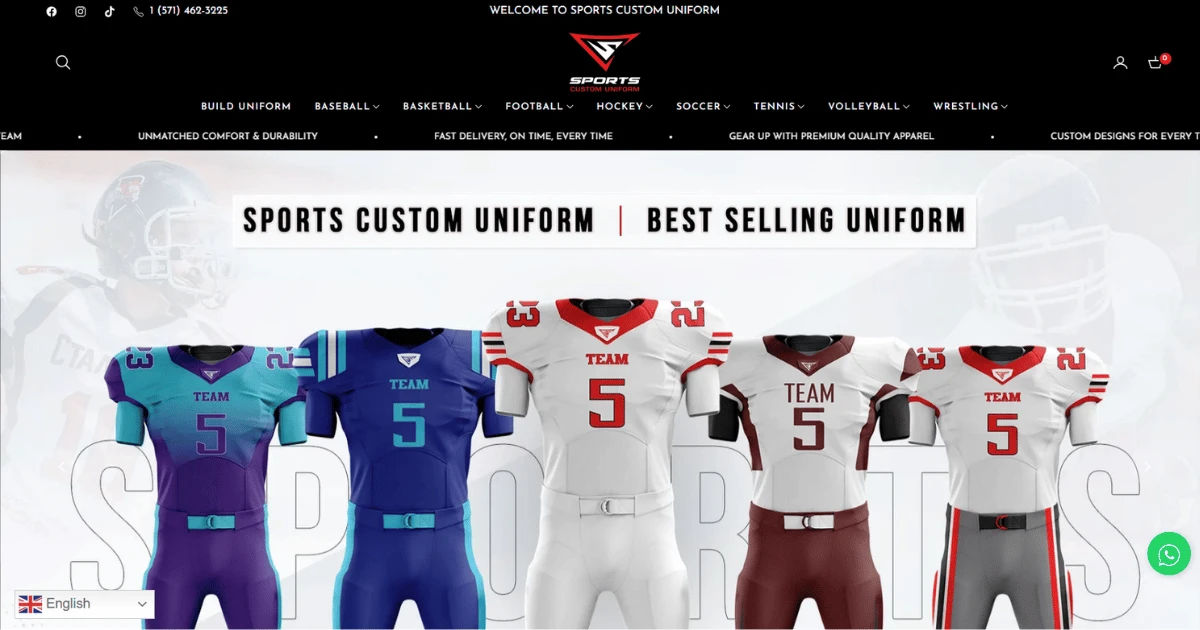
Choosing the correct size requires more than simply selecting your usual shirt or pants size. Football players need enough room for protective equipment, natural movement, and athletic performance. At the same time, the uniform should remain secure and streamlined throughout the game.
A properly fitted custom football uniform should feel comfortable when you are standing, running, bending, and wearing your complete football equipment. The goal is to create a balance between freedom of movement and a secure fit that stays in place during tackles, sprints, and other intense movements.
Why Proper Fit Matters
Football is a physically demanding sport. Players frequently accelerate, change direction, block, tackle, jump, and fall. Their clothing needs to support these movements rather than create additional problems.
A good fit helps prevent unnecessary fabric from catching on equipment or another player. It can also reduce distractions because the player does not have to repeatedly adjust the jersey, sleeves, or pants.
Comfort is another important factor. Players may spend several hours wearing their uniforms during games, practices, warmups, and team activities. A poor fit can cause rubbing, pressure, or restricted movement.
The fit also contributes to the overall appearance of a team. Uniforms that sit correctly on the body create a professional and organized look, especially when every player follows the same sizing standards.
How Should the Football Jersey Fit?
The jersey is one of the most visible parts of a football uniform. It should fit securely without feeling restrictive.
The chest area should have enough room to accommodate shoulder pads and other protective equipment. However, there should not be excessive fabric hanging around the torso.
When the jersey is worn without pads, it may appear slightly different from how it fits during a game. This is why sizing should be evaluated with the equipment the player normally wears.
Shoulder Area
The shoulder seams should sit in an appropriate position and should not feel excessively tight.
Football shoulder pads take up additional space beneath the jersey. A jersey designed to be worn over pads should allow the equipment to sit naturally without squeezing the player.
If the shoulders feel restricted when the player raises their arms, the jersey may be too small.
Chest and Torso
The chest should feel secure but not compressed. A player should be able to breathe comfortably and move the upper body without difficulty.
There should be enough room for the jersey to move naturally over the shoulder pads. At the same time, excessive looseness can cause the jersey to shift during contact.
Jersey Length
The jersey should be long enough to remain properly positioned during movement.
A jersey that is too short may expose the midsection when the player raises their arms or bends forward. A jersey that is excessively long may bunch up or interfere with equipment.
The ideal length depends partly on the player's position, body shape, equipment, and team preference.
How Should Football Pants Fit?
Football pants require careful attention because they interact with several pieces of protective equipment.
A good pair of football pants should provide a secure fit around the waist while leaving enough room for movement. They should not slide down during running or contact.
The leg openings should also work properly with the player's pads. Many football pants are designed to hold thigh and knee pads securely in their intended positions.
Waist Fit
The waistband should sit comfortably without digging into the player's skin.
The pants should remain secure during sprinting, jumping, and tackling. If a player constantly needs to pull them upward, the waist may be too loose.
On the other hand, excessive tightness can become uncomfortable during a long game.
Thigh and Leg Fit
The leg area should allow natural movement while keeping the protective pads positioned correctly.
Players should be able to bend their knees, run, and change direction without feeling that the pants are pulling against their legs.
A custom football uniform should account for the player's complete equipment setup rather than treating the pants as ordinary athletic clothing.
Consider the Protective Equipment
One of the biggest mistakes when choosing football uniform sizes is measuring the body without considering equipment.
Football players commonly wear shoulder pads, thigh pads, knee pads, hip pads, and other protective equipment. These items affect the amount of space needed in a uniform.
For example, a jersey that fits perfectly over a T-shirt may feel too tight over shoulder pads. Similarly, pants that fit comfortably without pads may not provide enough space once the protective equipment is installed.
The best approach is to test the uniform with the equipment that will actually be used during games.
How to Measure for the Right Size
Accurate measurements can make the sizing process much easier.
Start with the player's chest measurement. Wrap the measuring tape around the fullest part of the chest while keeping the tape level. Do not pull it excessively tight.
Next, measure the waist around the natural waistline. The tape should be comfortable rather than compressed against the body.
For pants, the inseam may also be important. Measure from the inside of the upper leg down to the desired length.
Some manufacturers may also provide measurements for shoulders, hips, sleeve length, or overall garment length.
Always compare these measurements with the manufacturer's specific size chart. A medium from one company may not have exactly the same dimensions as a medium from another.
Athletic Fit vs. Loose Fit
Football uniforms are available in different styles. Understanding the difference can help players choose the right option.
An athletic or fitted style generally sits closer to the body. It can provide a streamlined appearance and reduce excess fabric.
A looser fit provides more space and may be preferred by players who want additional room over protective equipment.
Neither option is automatically correct for every athlete. The player's position, equipment, body type, and personal comfort should all be considered.
A custom football uniform can often be ordered according to team preferences, allowing organizations to select sizing and design specifications that work for their athletes.
Position Can Influence Fit
Different football positions may have slightly different preferences regarding uniform fit.
Quarterbacks often need unrestricted upper-body movement because they throw, scramble, and handle the ball.
Wide receivers and defensive backs perform frequent sprints and rapid changes of direction. They may prefer a secure fit that minimizes excess material.
Linemen experience significant physical contact and may need enough room for substantial protective equipment.
Running backs need a combination of mobility and durability because they frequently accelerate through crowded areas.
Although position can influence preference, safety and comfort should always come first.
Signs That a Uniform Is Too Tight
Several signs can indicate that a football uniform is undersized.
If the jersey pulls tightly across the chest when the player raises their arms, it may be too small. Difficulty moving the shoulders or discomfort around the armpits is another warning sign.
For pants, restricted knee movement or excessive pressure around the waist can indicate an improper fit.
The uniform should never interfere with normal breathing or movement. If the player feels uncomfortable before the game even begins, the fit should be reconsidered.
Signs That a Uniform Is Too Loose
Excessive looseness can create its own problems.
A jersey that hangs too far from the body may shift during contact. Extra fabric can also bunch underneath equipment or become distracting.
Pants that are too loose may move out of position and cause protective pads to shift.
A properly fitted custom football uniform should stay reasonably secure while still allowing the player to move naturally.
Testing the Fit Before Game Day
Never rely only on how the uniform looks while standing still.
Players should test the uniform through several basic movements. Raise both arms, bend forward, squat, run, and rotate the upper body.
If possible, perform these movements while wearing the complete football equipment.
Pay attention to areas that pinch, pull, slide, or bunch. Small problems may become much more noticeable after an hour of active play.
Testing also gives coaches and team managers an opportunity to identify sizing issues before uniforms are ordered in large quantities.
Youth Football Uniforms
Youth players require additional consideration because children and teenagers are still growing.
Parents and coaches may be tempted to order a significantly larger size so the uniform can be used for several seasons. However, an oversized uniform can interfere with movement and equipment positioning.
A little growing room may be practical, but the uniform should still fit securely enough for safe athletic activity.
When ordering youth uniforms, accurate current measurements are more useful than relying only on age.
Customization and Fit
Customization allows teams to create uniforms that match their identity through colors, logos, numbers, names, and other design elements.
However, customization should never replace proper sizing.
Before placing a large team order, organizers should review the manufacturer's size chart and, when possible, request a sample. Players can then try the sample over their normal equipment.
This process can reduce costly sizing mistakes.
The design should also be positioned according to the garment's actual fit. Numbers, names, logos, and other graphics should remain visually balanced when the uniform is worn.
Common Fitting Mistakes
One common mistake is choosing a size based only on the player's regular clothing.
Football uniforms are specialized athletic garments. Their dimensions and intended use may differ significantly from casual shirts and pants.
Another mistake is ignoring protective equipment during fitting.
Players may also focus too heavily on appearance. A uniform can look excellent while standing still but become uncomfortable during actual movement.
Ordering an entire team without testing samples is another avoidable problem. Different body types may require different sizes, even when players are similar in age or height.
How Coaches and Team Managers Can Improve Sizing
Team managers should collect accurate measurements from every player before ordering uniforms.
Create a consistent measurement process so that everyone is measured in the same way. Record chest, waist, and other required measurements carefully.
Provide players with the manufacturer's size chart rather than asking them to guess their size.
If the supplier offers sample uniforms, distribute them before making the final order. Players should test the samples with their equipment and perform basic football movements.
This simple process can significantly reduce returns, exchanges, and dissatisfaction.
Comfort Should Come First
A uniform should look professional, but comfort and function are more important.
Players need to focus on the game rather than thinking about a tight waistband, restrictive shoulders, or a jersey that keeps moving out of position.
Fabric selection can also influence comfort. Breathable materials can help manage moisture during intense activity, while durable construction can withstand repeated use and washing.
A properly selected custom football uniform should combine appearance, durability, mobility, and comfort.
Caring for a Properly Fitted Uniform
Correct care can help a uniform maintain its original fit.
Always follow the manufacturer's washing instructions. Excessive heat can affect certain fabrics, elastic components, and printed graphics.
Avoid using cleaning products that may damage the material or decorations.
After washing, inspect the uniform for stretched areas, damaged seams, or changes in fit. Regular maintenance can extend the useful life of the garment.
Teams should also store uniforms properly between games and seasons.
Final Fitting Checklist
Before approving a football uniform, check several key areas.
The jersey should allow comfortable arm movement and fit properly over shoulder pads. The torso should not feel excessively tight or loose.
The pants should remain secure at the waist and allow unrestricted leg movement.
Protective pads should stay in their intended positions.
The player should be able to run, bend, squat, jump, and rotate comfortably.
Finally, the uniform should remain secure during realistic football movements rather than only while standing.
Conclusion
The right football uniform fit is a balance between security, comfort, mobility, and protection. A uniform should not be so tight that it restricts movement, but it should also avoid excessive material that can shift or become distracting during play.
The best approach is to measure the player accurately, follow the manufacturer's size chart, and test the garment with the protective equipment used during actual games. Players should also perform realistic movements before approving the final size.
A custom football uniform should be selected with the individual athlete and the demands of football in mind. Jerseys need adequate room around the shoulders and chest, while pants must provide a secure waist and enough freedom for running and bending.
Teams should avoid assuming that standard clothing sizes will automatically work. Body proportions, equipment, playing position, and personal preferences can all affect the ideal fit.
Ultimately, the best uniform is one that the player barely notices while competing. When the fit is correct, athletes can concentrate on their responsibilities, move confidently, and perform without unnecessary distractions. Careful sizing before ordering can therefore make a major difference in both the appearance and performance of a football team.