Cleaning the exterior glass of commercial buildings, office towers, and modern properties requires the right equipment and techniques. Traditional window cleaning methods can be time-consuming, especially when dealing with tall buildings or difficult-to-reach windows. As technology improves, drone-based cleaning has become an interesting alternative. However, property owners often have one important question: Is this modern cleaning method safe for glass? 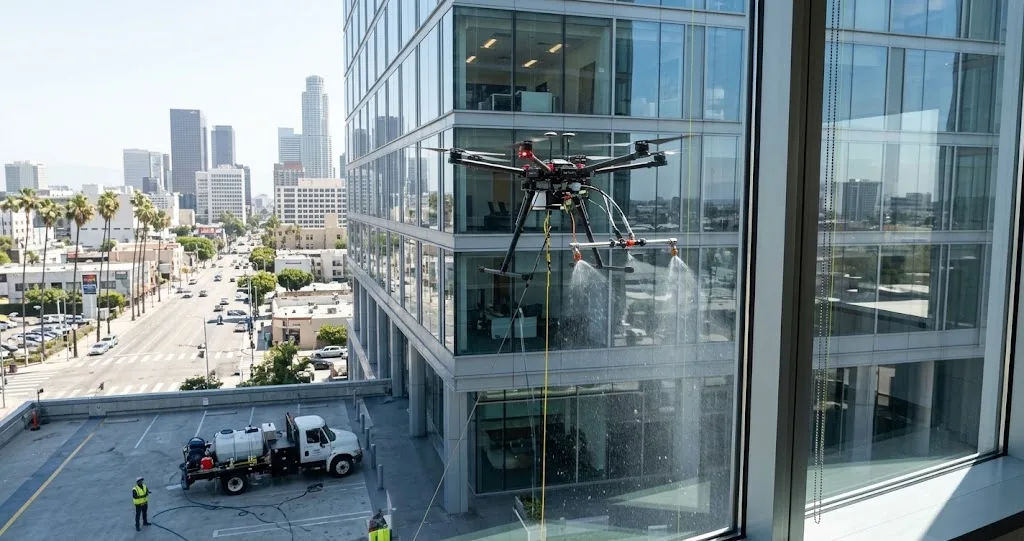 Drone Cleaning los angeles offers a technology-driven approach to exterior window maintenance. It uses specially designed drones and controlled cleaning systems to reach elevated glass surfaces without requiring cleaners to access every area manually. Although this method can improve accessibility and efficiency, its safety depends on the equipment, cleaning pressure, water quality, and experience of the service provider.
Glass is a durable building material, but it is not completely resistant to damage. Incorrect cleaning techniques, unsuitable chemicals, excessive pressure, or poorly controlled equipment can create problems. Understanding how drone cleaning works and what precautions professionals should follow can help building owners make informed decisions.
This comprehensive guide explains whether drone cleaning is safe for glass, what factors influence its effectiveness, which types of windows are suitable, and how property owners can protect their building exteriors.
How Drone Cleaning Works
Drone cleaning is a modern exterior maintenance method that uses remotely operated aerial equipment to clean building surfaces. Instead of relying entirely on traditional access systems, trained operators control specialized drones from a safe position.
These drones may carry or work alongside water-fed cleaning equipment that delivers water or approved cleaning solutions to exterior surfaces.
The cleaning process generally involves several stages.
Initial Building Inspection
Before starting, professionals inspect the building to understand its height, architectural design, and glass conditions.
They identify potential obstacles, sensitive surfaces, damaged windows, and areas that require special attention.
This inspection helps determine whether drone cleaning is suitable for the property.
Equipment Preparation
The cleaning team checks the drone, communication systems, cleaning equipment, and water delivery arrangements.
The equipment must be appropriate for the building's structure and the cleaning requirements.
Controlled Glass Cleaning
Once the equipment is ready, trained operators guide the drone around the designated exterior surfaces.
Depending on the system, water or a suitable cleaning solution is applied to loosen dust, dirt, and other surface contaminants.
The cleaning process should remain controlled to prevent unnecessary pressure or contact with the glass.
Final Inspection
After cleaning, professionals examine the glass to identify remaining dirt, water marks, or areas that may require additional attention.
A final inspection helps confirm whether the cleaning process has achieved the expected result.
Is Drone Cleaning Los Angeles Safe for Glass?
Yes, drone cleaning can be safe for glass when performed with suitable equipment, appropriate cleaning pressure, and trained operators.
However, it is important to understand that not every drone cleaning system is automatically suitable for every glass surface.
Different buildings use different types of glass, including tempered, laminated, insulated, coated, and decorative glass. Each type may have specific maintenance requirements.
For example, some windows include protective coatings that can be affected by unsuitable chemicals or abrasive cleaning materials.
Drone Cleaning los angeles should therefore begin with an assessment of the glass rather than using the same cleaning approach for every building.
The safest method is one that considers the condition, construction, and manufacturer recommendations for the glass.
Why Cleaning Pressure Matters
Water pressure is one of the most important factors in exterior glass cleaning.
Excessive pressure can place unnecessary stress on window seals, frames, and vulnerable glass installations.
Although properly installed glass can withstand normal environmental conditions, it should not be exposed to inappropriate cleaning pressure.
Professional operators should use equipment designed for exterior glass maintenance and follow the manufacturer's recommended operating limits.
Why Controlled Movement Is Important
Drone movement must remain stable and predictable during cleaning.
Sudden movements or accidental contact with glass can create unnecessary risks.
Professional operators should understand the drone's handling characteristics and maintain appropriate separation from building surfaces.
The cleaning equipment should also be positioned to minimize the possibility of physical contact with windows.
Factors That Affect Glass Safety During Drone Cleaning
Several conditions determine whether drone cleaning is appropriate for a particular building.
Understanding these factors helps property managers choose a service that protects their windows.
1. Type of Glass
Different glass materials have different strengths and maintenance requirements.
Tempered glass is designed to provide greater resistance to certain types of stress than ordinary glass. Laminated glass contains multiple layers joined by an interlayer.
Insulated glass units contain separate panes with a sealed space between them.
Some commercial buildings also use tinted or coated glass to control sunlight and improve energy efficiency.
Before cleaning, professionals should identify the glass type whenever possible.
This helps them select suitable cleaning products and techniques.
2. Water Pressure
Water pressure should be appropriate for the glass and surrounding building materials.
Too much pressure may affect seals, joints, and other vulnerable components.
A professional cleaning provider should understand how to adjust the equipment according to the property's requirements.
The objective is to remove dirt effectively without placing unnecessary stress on the windows.
3. Cleaning Solutions
Not every cleaning chemical is suitable for every glass surface.
Strong chemicals, abrasive compounds, and unsuitable detergents may damage certain coatings or leave unwanted residue.
Professionals should use cleaning solutions specifically approved for the glass and its protective finishes.
In many situations, purified water can be useful because it contains fewer dissolved minerals that contribute to spotting.
4. Weather Conditions
Weather can affect drone stability and cleaning quality.
Strong winds may make it difficult to maintain consistent positioning. Rain can reduce visibility and make cleaning results harder to evaluate.
Extreme weather may also interfere with equipment operation.
A responsible cleaning company should evaluate conditions before beginning work and postpone operations when safety requirements cannot be met.
5. Existing Glass Damage
Windows with existing cracks, loose components, damaged seals, or other visible defects require special attention.
Cleaning should not begin until the condition of vulnerable areas has been evaluated.
Applying water or cleaning pressure to already damaged glass may increase the possibility of further problems.
Benefits of Drone Cleaning for Glass Surfaces
Drone cleaning offers several potential advantages for commercial and residential properties.
When the equipment and operating methods are appropriate, it can make exterior maintenance more convenient.
Reduced Need for Direct Physical Access
Traditional high-rise window cleaning may require suspended platforms, scaffolding, or other access systems.
Drone technology can reduce the need for workers to physically reach every exterior window.
This may simplify certain cleaning operations and reduce some access-related risks.
However, drone operations still require trained personnel and appropriate safety procedures.
Access to Difficult Areas
Some buildings have architectural features that make exterior cleaning challenging.
These may include:
-
Tall glass facades.
-
Large commercial windows.
-
Elevated exterior panels.
-
Areas above entrances.
-
Buildings with complex exterior designs.
Drones can potentially reach selected locations that are difficult to access using conventional equipment.
The suitability of the method depends on the building's layout and available technology.
Consistent Cleaning Coverage
Modern drone cleaning systems can help operators maintain a planned cleaning pattern.
This can improve coverage across large glass surfaces when the equipment is properly controlled.
A structured cleaning process also makes it easier to identify areas that need additional attention.
Potential Time Savings
Large commercial buildings may contain hundreds or thousands of windows.
Traditional cleaning methods can require significant setup and access time.
Drone cleaning may reduce some of these requirements, depending on the building and cleaning system.
However, preparation, inspections, weather checks, and equipment setup remain important parts of the process.
Reduced Disruption to Building Activities
Because certain drone systems can operate externally, they may reduce the need to enter individual offices or disturb occupants.
This can be helpful for commercial properties where employees and visitors need uninterrupted access.
Nevertheless, building management should coordinate cleaning schedules and establish suitable ground-level safety arrangements.
Can Drone Cleaning Scratch or Damage Glass?
Drone cleaning does not automatically scratch glass. The possibility of damage depends more on the cleaning materials, equipment condition, and operating techniques than on the drone itself.
Glass can develop scratches when hard particles are dragged across its surface.
For example, construction dust, sand, and other abrasive contaminants may become trapped between cleaning equipment and the glass.
If these particles are moved across the surface using unsuitable tools, they can create visible marks.
How Scratches Can Be Prevented
Professional cleaning providers should follow several precautions.
Avoid abrasive materials: Rough brushes, unsuitable pads, and contaminated cleaning tools should not be used on sensitive glass.
Remove loose debris carefully: Heavy dust and loose particles should be removed using an appropriate method before more direct cleaning.
Use clean water: Contaminated water can leave deposits and may introduce unwanted particles.
Inspect equipment: Cleaning components should be checked regularly to ensure they are clean and suitable for glass.
Avoid unnecessary contact: Drone equipment should maintain appropriate separation from the building surface.
These practices reduce the likelihood of accidental scratching.
Which Types of Glass Are Suitable for Drone Cleaning?
Drone cleaning may be appropriate for many common building glass types, but suitability should always be assessed individually.
Tempered Glass
Tempered glass is commonly used in commercial buildings, offices, and modern residential properties.
It is manufactured through a process that improves its resistance to certain forms of stress.
Professional drone cleaning may be suitable for tempered glass when the cleaning pressure and solutions are appropriate.
Laminated Glass
Laminated glass consists of multiple glass layers joined by an interlayer.
It is commonly selected for safety-related applications and architectural installations.
Its exposed surfaces can generally be cleaned using suitable glass-cleaning techniques.
However, damaged edges and existing defects should be assessed before cleaning.
Insulated Glass Units
Insulated glass units are commonly found in energy-efficient buildings.
They contain multiple panes separated by a sealed space.
Exterior cleaning normally involves cleaning the exposed outer surface.
Special care should be taken around seals, joints, and window frames because inappropriate pressure may affect vulnerable components.
Coated and Tinted Glass
Coated and tinted glass can require more specialized maintenance.
Some coatings are located on exposed surfaces, while others are protected within the glass assembly.
The cleaning company should confirm the manufacturer's maintenance recommendations before choosing cleaning products.
This is particularly important for buildings with reflective, solar-control, or decorative glass.
Safety Precautions Professional Drone Cleaning Companies Should Follow
Choosing an experienced cleaning provider is one of the most important ways to protect glass surfaces.
A professional company should have clear procedures covering equipment, operators, building conditions, and cleaning materials.
Proper Equipment Inspection
Drone systems should be inspected before use.
The cleaning team should check the equipment's general condition, communication systems, cleaning attachments, and water delivery arrangements.
Regular maintenance helps reduce the possibility of equipment-related problems.
Qualified Drone Operators
Operating a cleaning drone requires more than basic knowledge of flying technology.
Operators should understand the equipment, building surroundings, and specific requirements of exterior cleaning.
They should also follow applicable aviation rules and operating restrictions.
Building-Specific Cleaning Plans
Every building has different requirements.
A professional provider should develop a cleaning plan based on building height, glass type, surrounding structures, and environmental conditions.
A customized plan is generally more appropriate than applying identical cleaning procedures to every property.
Ground-Level Safety
Drone cleaning can involve equipment operating above pedestrians, vehicles, and building entrances.
The company should establish appropriate exclusion areas and warning arrangements.
People should not be allowed to stand directly beneath active cleaning operations.
Appropriate Insurance
Property owners should ask whether the cleaning company carries suitable insurance.
Coverage should be relevant to its operations and potential property damage.
The company should also be able to explain its safety procedures and responsibilities before beginning the project.
Drone Cleaning vs. Traditional Window Cleaning
Both drone cleaning and traditional methods have advantages.
The right choice depends on the building, cleaning requirements, and available equipment.
|
Comparison |
Drone Cleaning |
Traditional Cleaning |
|---|---|---|
|
Access |
Uses aerial equipment |
Uses conventional access systems |
|
Operator position |
Often controlled remotely |
May involve working at height |
|
Difficult areas |
Can reach selected elevated surfaces |
Depends on access arrangements |
|
Physical contact |
Can minimize direct equipment contact |
May involve direct cleaning tools |
|
Setup |
Requires drone and cleaning equipment |
May require platforms or scaffolding |
|
Glass safety |
Depends on pressure and equipment control |
Depends on tools and cleaning technique |
When Drone Cleaning May Be Better
Drone cleaning may be useful for buildings with large exterior glass areas and challenging access requirements.
It can also be helpful when building management wants to reduce certain disruptions associated with traditional access systems.
When Traditional Cleaning May Be Better
Traditional cleaning may be more appropriate for detailed work, delicate decorative glass, difficult stains, and surfaces requiring close physical inspection.
It may also be preferable when drone operation is restricted or the building design makes aerial cleaning unsuitable.
In some situations, combining both methods can provide the best results.
Common Glass Problems That Require Special Attention
Before scheduling a cleaning service, property owners should understand which glass problems may need specialized treatment.
Hard Water Stains
Hard water stains develop when mineral-rich water dries on glass.
They can leave visible marks that ordinary cleaning may not remove.
Professional cleaners may need an appropriate mineral-deposit treatment.
However, abrasive removal methods should be avoided unless specifically approved for the glass.
Construction Dust
New buildings and renovation projects often accumulate cement dust, plaster residue, and other construction materials.
Some particles can be abrasive.
These surfaces may require specialized cleaning procedures before routine maintenance begins.
Bird Droppings
Bird droppings can become difficult to remove when left on glass for extended periods.
Professionals should use suitable cleaning solutions and allow contaminants to loosen before removing them.
Environmental Pollution
Buildings in busy urban areas can accumulate vehicle emissions, airborne dust, and other pollutants.
Regular maintenance helps prevent heavy buildup and keeps exterior glass looking cleaner.
How to Choose a Reliable Drone Cleaning Service in Los Angeles
Selecting the right service provider is just as important as selecting the cleaning method.
A company may have modern equipment, but it should also understand glass maintenance and building safety.
Consider the following points before making a decision.
Check Industry Experience
Ask how long the company has provided exterior cleaning services.
Experience with commercial glass, elevated surfaces, and different building designs can be valuable.
Ask About Cleaning Equipment
Find out what type of drone and cleaning system the company uses.
Ask whether the equipment is designed for glass cleaning and how pressure is controlled.
Verify Cleaning Products
Request information about the cleaning solutions.
A reliable company should explain whether its products are suitable for your specific glass type.
Review Safety Procedures
Ask how the company manages weather conditions, equipment inspections, pedestrian safety, and emergency situations.
These details can help you understand how professionally the service is managed.
Request References
Previous projects can provide useful information about the company's experience.
Look for examples involving buildings similar to yours.
You can also ask about customer feedback and how the company handles complaints or accidental property damage.
Discuss Insurance and Responsibilities
Before approving the work, understand the company's insurance arrangements.
Confirm who is responsible if the cleaning operation causes damage to glass, frames, or surrounding property.
Clear communication helps prevent misunderstandings.
How Often Should Glass Be Cleaned Using Drones?
There is no single cleaning schedule that works for every building.
The ideal frequency depends on environmental conditions, building location, window design, and the property's appearance requirements.
For example, buildings near busy roads may accumulate dirt more quickly than properties in quieter areas.
Commercial buildings with large glass facades may also require more frequent maintenance because visible dirt can affect their professional appearance.
A property manager should consider:
-
Local air pollution.
-
Dust and construction activity.
-
Rainfall and weather patterns.
-
Bird activity.
-
Building height and location.
-
Customer and employee expectations.
A professional inspection can help determine an appropriate cleaning schedule.
Regular maintenance is generally better than waiting until dirt becomes difficult to remove.
Questions to Ask Before Scheduling Drone Glass Cleaning
Asking the right questions can help property owners understand whether a cleaning company is prepared to handle their building safely.
Consider asking:
-
Is your drone equipment designed specifically for exterior glass cleaning?
-
Can you identify the type of glass installed in my building?
-
How do you control water pressure during cleaning?
-
Which cleaning solutions do you use?
-
How do you prevent scratches and accidental glass contact?
-
What happens if weather conditions become unsuitable?
-
Do you carry appropriate insurance?
-
Can you provide examples of similar completed projects?
-
How do you protect pedestrians and vehicles?
-
Do you inspect the glass before and after cleaning?
Clear answers to these questions can help you evaluate the provider's professionalism.
Conclusion
Drone technology is creating new opportunities for exterior building maintenance, particularly in cities with large commercial properties and modern glass architecture. It offers an alternative approach to reaching elevated windows and cleaning difficult exterior surfaces.
So, is drone cleaning safe for glass? Yes, it can be a safe and effective option when the cleaning process is properly planned and performed by qualified professionals. However, safety should never be assumed simply because a company uses modern equipment.
The type of glass, water pressure, cleaning solutions, equipment condition, weather, and operator experience all influence the final result. Property owners should make sure that their cleaning provider understands these factors before approving any work.
Drone Cleaning los angeles can offer practical benefits, including improved access to elevated windows, reduced dependence on certain traditional access methods, and potentially less disruption to building activities. Nevertheless, the equipment must be suitable for the property's specific requirements.
It is equally important to choose a company that follows appropriate operating procedures, inspects glass surfaces, maintains its equipment, and carries suitable insurance.
Ultimately, protecting glass should always be the priority. A professional cleaning service will focus not only on removing dirt but also on preserving the condition, appearance, and long-term performance of the windows.
With proper planning, suitable cleaning techniques, and experienced operators, drone cleaning can become a valuable part of modern glass maintenance.