Halal food has become an important part of Chicago's diverse dining scene. From traditional Middle Eastern meals to American-style burgers, diners can find many options that cater to Islamic dietary requirements. Burgers are especially popular because they combine familiar flavors, convenient dining, and plenty of opportunities to customize ingredients. However, choosing a restaurant that serves halal burgers does not always answer every question about how its food is sourced, prepared, and served.
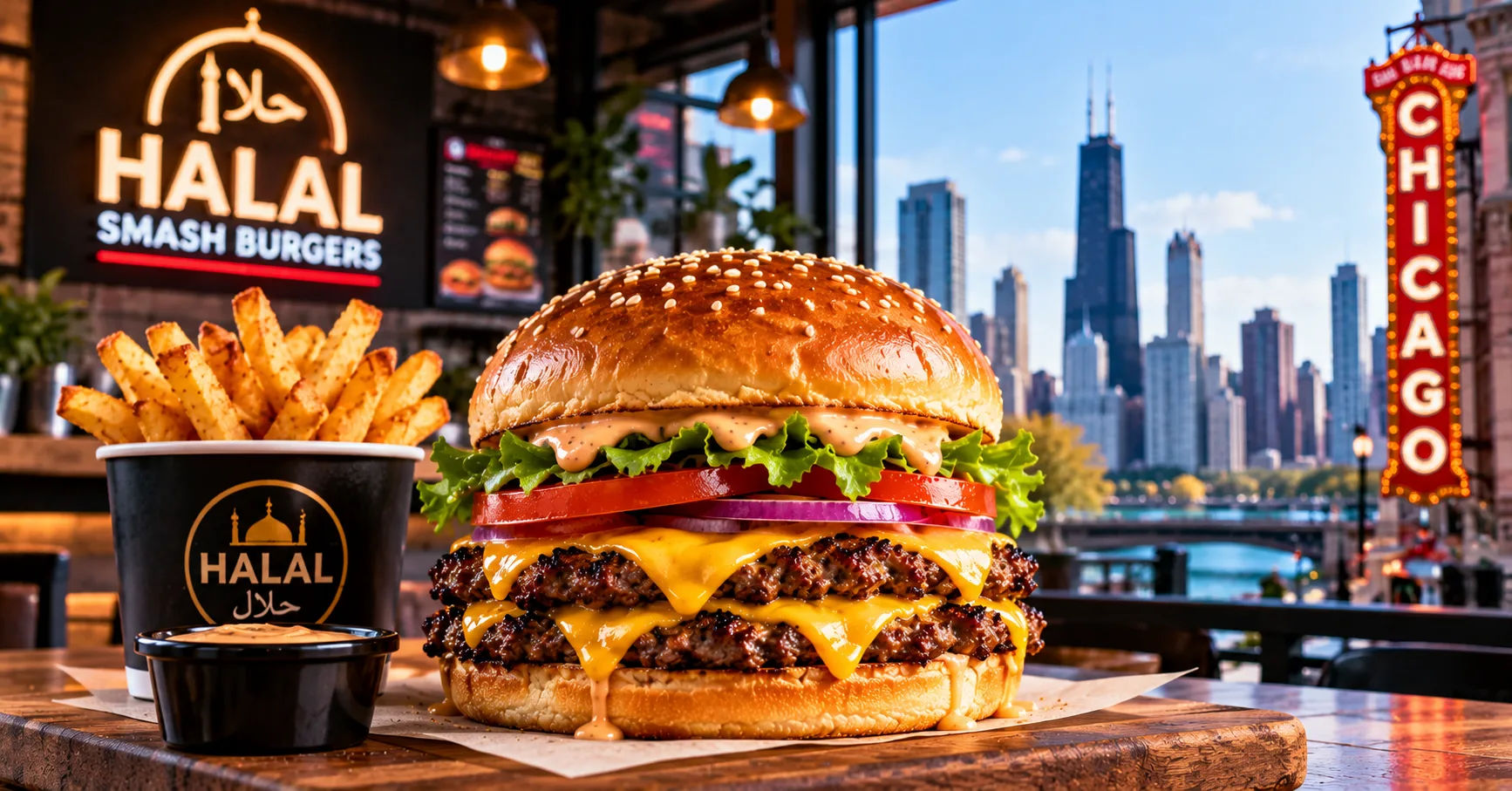
For Muslim diners, understanding the difference between a restaurant that offers halal meat and one that follows halal practices throughout its operation is essential. Meat sourcing, cheese, sauces, cooking equipment, storage, and food preparation can all affect whether a meal meets an individual's halal standards. These details are particularly important when ordering a burger with several processed ingredients or specialty toppings.
When considering whether a Halal Burger Restaurant in Chicago is fully halal, it is important to look beyond the menu description. A restaurant might use halal-certified beef but also serve non-halal products, while another might maintain separate preparation areas and carefully check every ingredient. The meaning of fully halal can also vary depending on the certification standard and the level of assurance a customer expects.
This comprehensive guide explains what fully halal means, how to check a restaurant's practices, which questions to ask before ordering, and how to make an informed dining decision in Chicago. It also explores common misunderstandings about halal food so that diners can feel more confident about their choices.
What Does Fully Halal Mean?
The term halal means permissible under Islamic law. When applied to food, it refers to ingredients and preparation practices that comply with relevant Islamic dietary requirements.
A restaurant that describes itself as fully halal generally aims to ensure that all the food it offers meets those requirements. However, the precise meaning of this claim depends on the restaurant's policies, ingredients, suppliers, and certification arrangements.
Halal Meat and Proper Sourcing
Beef, chicken, and other permissible meats must come from appropriate sources and meet applicable Islamic slaughter requirements. Restaurants may purchase their meat from halal-certified suppliers or other reliable sources that provide suitable assurance.
For burgers, this means that the beef used in the patties should meet the restaurant's stated halal standards. If chicken burgers are also available, the same principle applies to the chicken.
Customers who want additional confidence can ask about the meat supplier and whether the restaurant has current halal certification.
Suitable Ingredients
Meat is only one part of a burger. Buns, cheese, sauces, seasonings, cooking oils, and toppings must also be considered.
Many common burger ingredients are naturally permissible, but processed products can contain additives or ingredients whose origins are not immediately clear. Depending on the product and applicable halal standard, these may require further verification.
A restaurant that takes halal compliance seriously should have a reasonable process for checking ingredient information and addressing uncertainty.
Appropriate Food Preparation
Food preparation also matters. A restaurant should have procedures to prevent halal ingredients from coming into contact with prohibited substances.
This can involve dedicated equipment, separate storage, appropriate cleaning procedures, and clear instructions for staff. The exact arrangements depend on the restaurant's menu and the halal standard it follows.
For customers, the important point is that halal status concerns the whole food-handling process, not just the name of the meat on the menu.
Does Every Halal Burger Restaurant in Chicago Serve Only Halal Food?
No. A restaurant that serves halal burgers does not necessarily serve an exclusively halal menu.
Some establishments focus entirely on halal food. Others offer halal beef or chicken alongside additional menu items that may not meet the same requirements. A restaurant could also have halal meat but use ingredients or preparation methods that require clarification.
These differences do not automatically mean that a restaurant is being misleading. Businesses may use the word halal to describe specific products rather than their entire operation. The key is to understand exactly what the restaurant's claim covers.
Restaurants With Fully Halal Menus
A restaurant with a fully halal menu aims to ensure that every food item it sells meets its halal requirements.
Such an establishment should be able to explain its sourcing policies, ingredient checks, and preparation procedures. Certification from a credible halal certifying organization can provide additional assurance.
However, a fully halal menu claim should still be assessed according to the restaurant's actual practices and the certification or verification available.
Restaurants That Offer Halal Meat Options
Some burger restaurants serve halal beef or chicken but also offer other products that are not halal.
In this situation, customers should establish whether the halal options are prepared and handled in a way that meets their personal requirements. Relevant details may include shared grills, fryers, utensils, storage areas, and preparation counters.
People differ in the level of separation they require, so it is reasonable to ask specific questions rather than making assumptions.
Restaurants With Unclear Halal Claims
A menu may use terms such as halal burger, halal beef, or halal-friendly without explaining whether the claim applies to the whole restaurant.
When information is unclear, ask for clarification. A clear answer about the meat source, ingredients, and preparation methods is more useful than relying on a promotional phrase alone.
How to Check Whether a Restaurant Is Fully Halal
Finding a restaurant that meets your dietary requirements does not have to be difficult. A few practical checks can help you understand whether its halal claims are reliable.
1. Look for Halal Certification
Halal certification is one useful way to verify a restaurant's claims. A certifying organization may review ingredient sourcing, suppliers, preparation practices, and other aspects of food handling.
When visiting a Halal Burger Restaurant in Chicago, look for information about its certifying organization. If certification is advertised, you can ask whether it is current and which products or locations it covers.
Not every establishment follows the same certification arrangement, so the absence of a displayed certificate does not automatically prove that its food is not halal. However, reliable documentation can provide valuable reassurance.
2. Ask About Meat Suppliers
Ask whether the restaurant sources its beef and chicken from halal-certified suppliers.
You can also ask whether the supplier's certification or documentation is available. A restaurant that understands its sourcing arrangements should be able to explain them clearly.
This question is particularly important if the menu includes several kinds of meat or if the restaurant changes suppliers regularly.
3. Review the Ingredients
Pay attention to ingredients beyond the meat. Cheese, sauces, bread, marinades, and seasoning blends can vary between brands.
For example, certain cheeses may contain processing ingredients that require verification. Some sauces may also contain ingredients that are unsuitable under the halal standard you follow.
A restaurant does not necessarily need to provide a full ingredient breakdown for every item immediately, but staff should know how to obtain relevant information when customers ask.
4. Ask About Cooking Equipment
One of the most useful questions concerns how food is prepared.
Ask whether halal patties are cooked on dedicated equipment or whether the restaurant uses shared cooking surfaces. If equipment is shared, ask about the cleaning and separation procedures in place.
Fryers deserve particular attention because oil can be shared among different products. Similarly, utensils and preparation counters should be handled appropriately to prevent cross-contact.
5. Check the Restaurant's Official Information
A restaurant's official website or menu may explain its halal policy. Some businesses publish information about certification, suppliers, and ingredient sourcing.
Look for specific statements rather than relying solely on general marketing language. If the information is outdated or incomplete, contact the restaurant directly.
Why Meat Alone Does Not Determine Whether a Restaurant Is Fully Halal
It is easy to assume that a burger is halal as long as the beef is halal. In practice, several other elements can affect whether the meal meets the requirements a diner follows.
Burger Buns and Bread
Burger buns are often made from flour, water, yeast, sugar, and oil. These ingredients are generally straightforward, but commercially produced bread may contain emulsifiers, enzymes, or other additives.
If you need assurance about every ingredient, ask whether the restaurant can verify the buns' suitability. This is especially relevant when a bun is supplied by a third-party bakery.
Cheese and Dairy Products
Cheese is another ingredient worth checking. Different varieties use different production methods, and some contain rennet or enzymes that may require verification.
American-style cheese, cheddar, mozzarella, and specialty cheeses should not automatically be assumed to have identical halal status. The ingredients and applicable certification determine whether a particular product meets your requirements.
Sauces and Marinades
Burger sauces may include mayonnaise, mustard, ketchup, barbecue sauce, or specialty dressings.
Most simple condiments can be suitable, but commercial products differ. Marinades and specialty sauces deserve particular attention when they contain complex flavorings or ingredients of uncertain origin.
A restaurant that checks its ingredient labels and supplier information is better positioned to answer customers' questions.
Cooking Oils and Fryer Practices
Cooking oil is often overlooked. If a restaurant fries halal products alongside other foods, the fryer arrangements may matter to customers who require separation.
Ask whether fries, chicken products, and other fried menu items share equipment. This helps you understand the restaurant's actual practices instead of making assumptions based on the menu.
What Questions Should You Ask Before Ordering?
When visiting a Halal Burger Restaurant in Chicago, you can obtain useful information without turning your meal into a lengthy investigation.
Here are some practical questions:
-
Is all the meat you serve halal, or only certain menu items?
-
Is your beef supplied by a halal-certified supplier?
-
Do you have current halal certification, and what does it cover?
-
Are the cheese, buns, sauces, and seasonings checked for halal suitability?
-
Do you use separate cooking equipment for halal and non-halal foods?
-
If equipment is shared, what cleaning and separation procedures do you follow?
-
Can you accommodate specific halal requirements if I explain them?
You do not need to ask every question at every restaurant. Focus on the details that matter most to you.
For example, if the restaurant advertises an entirely halal menu, you may want to confirm that the claim includes sauces, sides, and desserts. If you are ordering from a restaurant that also serves non-halal products, preparation procedures may be especially important.
A helpful response should be clear, specific, and consistent. If a staff member does not know the answer, they may be able to ask a manager or consult the restaurant's ingredient information.
Common Misunderstandings About Halal Restaurants
Several misunderstandings can make it harder for customers to evaluate halal claims fairly.
A Halal Burger Does Not Automatically Mean a Fully Halal Restaurant
A restaurant may serve a halal beef burger while offering other products that do not meet the same standard.
The important distinction is between a particular halal menu item and a restaurant-wide halal policy. Always clarify which claim the business makes.
Serving No Pork Does Not Prove Everything Is Halal
Avoiding pork is an important consideration, but it does not address every aspect of halal compliance.
Meat sourcing, slaughter requirements, other ingredients, and preparation practices also matter. A restaurant's complete halal policy should account for the applicable requirements beyond simply excluding pork.
A Restaurant's Name Is Not Proof of Certification
Words such as halal, Muslim-friendly, or Islamic in a business name or description do not independently verify its practices.
Look for credible information about sourcing and preparation. If certification matters to you, confirm what organization issued it and what it covers.
Lack of Visible Certification Is Not Definitive Proof
Some restaurants may rely on supplier documentation or other arrangements rather than displaying a certification certificate. Requirements and certification practices vary.
Rather than immediately concluding that the food is unsuitable, ask what evidence the restaurant can provide and decide whether it satisfies your own standards.
How Chicago Diners Can Make More Informed Choices
Chicago has a broad dining scene, and halal burger options can differ in their menus, suppliers, and food-handling arrangements.
When researching a restaurant, begin with its official website and current menu. Look for a clear halal statement and any information about certification or meat sourcing.
You can then contact the business to confirm details that are not explained online. This is particularly helpful if you are planning a family meal, dining with friends who have different dietary requirements, or ordering a burger with several specialty ingredients.
Reviews can also provide useful context about food quality and customer service. However, a positive review or another customer's statement that a restaurant is halal should not replace verification when you need specific assurance.
If you are visiting an unfamiliar establishment, consider asking about its halal policy before ordering. This is usually more effective than waiting until the food arrives to discover that an ingredient or preparation method does not meet your needs.
A trustworthy restaurant should treat reasonable dietary questions respectfully. Clear communication helps both the customer and the business avoid misunderstandings.
What Does Fully Halal Mean for Families and Groups?
Dining with family or friends can involve several different preferences. Some people require an exclusively halal establishment, while others are comfortable ordering halal items from a restaurant with a mixed menu if the preparation arrangements meet their standards.
Before choosing a venue, discuss the requirements of the people in your group.
If everyone prefers an entirely halal environment, look for a restaurant that clearly confirms its full menu policy. Ask whether sides, desserts, beverages, and children's meals are included in that policy.
If only particular diners require halal food, check whether the restaurant can explain how those meals are sourced and prepared. It is better to establish these details in advance than to assume that everyone interprets a halal claim in the same way.
For families, ingredient information can also be useful when children have allergies or other dietary restrictions. Halal compliance and allergen safety are separate considerations, so communicate both clearly when ordering.
Conclusion
Whether a Halal Burger Restaurant in Chicago is fully halal depends on more than the meat used in its burgers. Meat sourcing, cheese, bread, sauces, cooking equipment, storage, and food-handling procedures can all influence whether the restaurant meets the halal requirements its customers expect.
Some restaurants maintain fully halal menus and have policies designed to cover every item they serve. Others offer halal meat options alongside additional products, making it important to understand which foods are covered by their claims. Neither situation should be judged solely by a restaurant's name or promotional wording.
The most reliable approach is to check the available evidence. Look for credible halal certification when available, ask about suppliers, verify uncertain ingredients, and clarify how cooking equipment is managed. If a restaurant's website does not provide enough information, contacting the business directly can help resolve important questions.
Chicago diners have many reasons to explore different burger restaurants, from discovering new flavors to enjoying a convenient meal with friends and family. Understanding halal claims makes it easier to choose a restaurant that aligns with personal beliefs and dietary expectations.
Ultimately, a restaurant's willingness to explain its sourcing and preparation practices is valuable, but the details matter more than general assurances. By asking clear questions and reviewing reliable information, you can make a better-informed decision about where to eat and which menu items suit your needs.