This article summarizes published peptide research. All is presented for explore cite only and is not motivated as medical checkup advice or guidance for subjective peptide use. Products documented are search compounds not for human being expenditure, diagnostic or therapeutic application.
If you’ve researched next-generation angle-loss peptides, retatrutide likely appeared near the top of the list. As the first treble-agonist targeting GIP, GLP-1, and glucagon receptors at the same time, it offers a mechanics of sue that no other commercially available intensify replicates. Phase-2 trial data showed participants losing up to 24 per centum of their body angle over 48 weeks numbers that surpassed even tirzepatide at comparable timeframes.
But raw potency substance nothing without a trained dosing schedule. Retatrutide’s three-receptor natural action also makes it less kind than unity- or dual-agonists when doses jump too fast. The titration communications protocol distinct below draws on published clinical-trial schemas(the March 2023 NEJM data and the 2024 Phase-2 extension phone) and real-world practician guidance. Follow the stairs incisively, and you give your body time to adjust at each tear down while still progressing toward the therapeutic ceiling.
Disclaimer: This article is for knowledge and learning purposes only. It does not be health chec advice. Always look up a competent healthcare supplier before start any peptide protocol.
Why Titration Matters for Retatrutide
Titration the rehearse of starting at a low dose and accretive step by step exists for one conclude: receptor version. GLP-1 receptors in the gut and brain-stem influence nausea, viscus motility, and appetence. GIP receptors modulate insulin secretion and fat metabolism. Glucagon receptors drive lipolysis and liverwort glucose yield. Flooding all three systems at full potency from day one would trigger off wicked duct in most users and potentially insecure hypoglycemia in anyone with remainder insulin sensitivity.
Clinical investigators organized the retatrutide dose-escalation agenda around 4-week blocks for incisively this reason out. Each plateau gives downregulated receptors time to re-sensitize part, smooth-muscle tissue in the GI piece of ground time to adjust motility patterns, and the colorful time to gluconeogenesis against a new glucagon-receptor tenancy rase. Skipping a tier or shortening the time interval frequently leads to discontinuance the opposite of what you want when the compound’s full gain appears at the 8 mg and 12 mg levels.
The 5-Phase Titration Protocol: 1 mg to 12 mg
Retatrutide is administered as a once-weekly body covering shot. Each stage lasts a lower limit of four weeks. Extending any stage to six or eight weeks is good and sometimes preferred shortening below four weeks is not advisable.
Phase 1 1 mg week(Weeks 1 through 4)
The prefatorial dose is deliberately sub-therapeutic for body-weight simplification. Its resolve is to undercoat GLP-1 and GIP sense organ populations and let the glucagon axis start adjusting. Most users report mild appetency reduction within the first seven days and mark early satiety by week two.
Expected personal effects: Reduced snacking, cold-shoulder minify in fast blood glucose, negligible to no nausea in the majority of users. Results are already panoptic at this start dose average out loss of 3-5 kg in the first month as appetency of course decreases and work unit ingestion drops without debate restriction.
Side-effect visibility at 1 mg: Fewer than 10 pct of visitation participants reportable any GI symptoms at this level. Occasional mild deadening may fall out as stomachic evacuation slows. Adequate hydration(minimum 2.5 liters ) and fiber largely prevent this.
For handy, right dosing, Retatrutide vials from Peptex ship with proved sinlessness certificates and clear reconstitution operating instructions.
Phase 2 2 mg week(Weeks 5 through 8)
Doubling from 1 mg to 2 mg is the gentlest in the protocol. The GLP-1 component part becomes more noticeable: meal portions shrink course, and many users begin skipping meals not from train but from unfeigned absence of hunger. Glucagon-receptor involution starts contributing to resting vitality outgo, though the increment is unpretentious.
Expected effects: Further appetency suppression, measurable melioration in fasting insulin, early on indications of low visceral fat on tomography(documented in tribulation subgroups).
Side-effect visibility at 2 mg: Mild sickness may in the first two or three days following the first 2 mg shot. It typically resolves within 48 hours and seldom recurs at resulting 2 mg injections. A handful of users undergo transeunt acid ebb feeding littler, more patronise meals and avoiding lying down within 90 minutes of feeding in effect mitigates this.
Phase 3 4 mg week(Weeks 9 through 12)
The jump from 2 mg to 4 mg is the first target where all three receptor systems are meaningfully engaged simultaneously. Fat oxidation accelerates noticeably. Users often report a shift in food preferences cravings for calorie-dense, high-sugar foods lessen, while protein and vegetable ingestion feels more satisfying. This is homogenous with glucagon-mediated changes in liverwort lipid handling and GIP-driven improvements in nutrient partition.
Expected personal effects: Weekly weight loss typically stabilizes at 0.8 to 1.2 kg. Waist circumference begins to lessen quicker than scale weight alone would suggest, reflective advantageous visceral-fat mobilization. HbA1c drops measurably in pre-diabetic users.
Side-effect profile at 4 mg: This is the raze where GI tolerability separates users who titrated patiently from those who rushed. Nausea chance rises to rough 20-25 percent but remains transeunt(24 to 72 hours post-injection). Mild diarrhea is possible in the first week. If sickness persists beyond three days, stay at 4 mg for an additional four-week before advancing. Your body is singing you it needs more time.
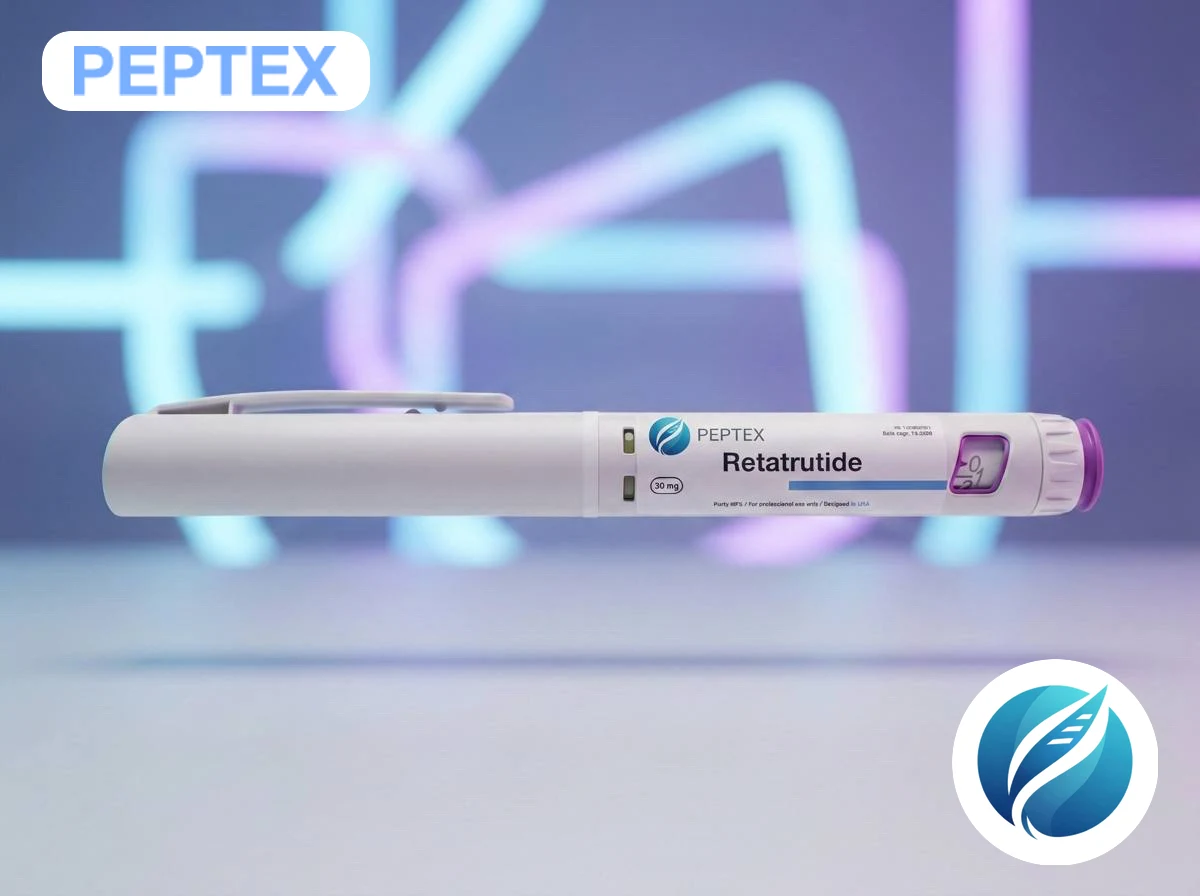
Users who favor pre-filled rescue systems can consider the peptex Pen from Peptex, which eliminates reconstitution and simplifies dose natural selection especially useful during the 4 mg stage when injection trust matters.
Phase 4 8 mg week(Weeks 13 through 16)
Eight milligrams is where nonsubjective investigators saw the sharpest prosody in dose-response curves. Glucagon-receptor natural process is now high enough to considerable thermogenesis. Resting organic process rate can increase by 100 to 200 kcal day compared to baseline a purposeful accelerator on top of appetite-driven energy unit reduction. In Phase-2 data, the 8 mg cohort achieved roughly 22 per centum body-weight loss at 48 weeks, versus 17 per centum for the 4 mg cohort.
Expected effects: Pronounced appetite suppression(some users report needing reminders to eat). Improved lipoid panels LDL decreases, triglycerides drop sharply, HDL rises. Blood-pressure improvements in hypertensive participants. Visceral fatty tissue on -sectional tomography shows striking reduction.
Side-effect visibility at 8 mg: Nausea incidence rises to around 30 percent but inclemency corpse mild to moderate. The most ordinarily reported new symptom at this tier is mild pyrosis or stomach upset. Proton-pump inhibitors or H2 blockers wield it in effect if adjustments are lean. Some users undergo transeunt weary in the first week at 8 mg as the body recalibrates vim metamorphosis this typically resolves by the second injection at this dose.
Key practical tip: agenda your shot on an when you have a lighter day in the lead. Many users find that injecting before bedtime allows the peak nausea windowpane(6 to 18 hours post-injection) to pass during sleep out.
Phase 5 12 mg week(Weeks 17 onward)
Twelve milligrams is the highest dose investigated in Phase-2 trials and represents full therapeutic engagement of all three sense organ targets. The 12 mg cohort achieved the newspaper headline 24 percent body-weight reduction at 48 weeks. Not every user needs to strain this pull dow if you have achieved your place angle or body-composition goal at 8 mg, there is no obligation to intensify further.