Sampling is where an apparel idea stops being a sketch and starts becoming a real product. For a startup brand, this stage is especially important because a wrong sample can lead to wasted fabric, incorrect sizing, delayed launches, and expensive production mistakes.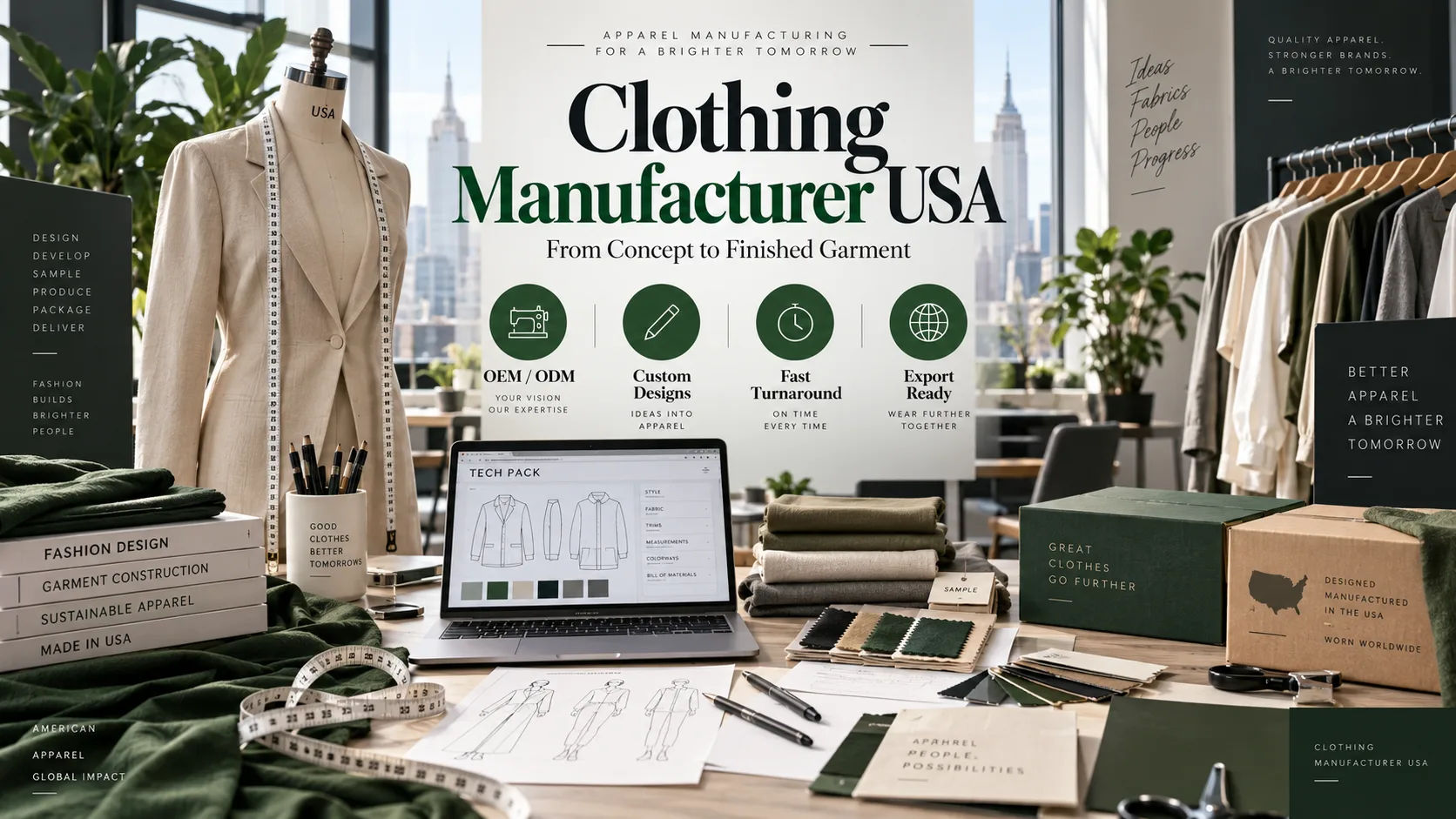
The purpose of sampling is not only to show what a garment looks like. A reliable bulk apparel manufacturer for startups uses sampling to check fit, construction, fabric behavior, color, trims, branding, measurements, finishing, and overall production quality. A good factory uses several checkpoints so problems are discovered while changes are still affordable.
That approach gives a startup a much clearer path from concept to production. Instead of guessing whether the finished garment will work, the brand can inspect a physical product and make informed corrections before committing to a larger order.
What Sampling Means for a Startup Apparel Brand
Apparel sampling is the process of producing one or more physical garments before the factory makes the full order. The sample is created from the brand's specifications, including measurements, fabric details, artwork, labels, stitching instructions, and finishing requirements.
For a new brand, the sample becomes a physical reference. Instead of discussing whether a sleeve is too wide or whether a hoodie feels too heavy, the founder and factory can examine the actual garment.
This reduces misunderstandings. It also creates a standard that the production team can follow later.
A professional bulk apparel manufacturer for startups normally separates sampling from bulk manufacturing. The sample must be approved before the factory commits significant material and labor to production.
The First Step: Reviewing the Tech Pack
Sampling usually begins with a technical review. The factory examines the tech pack or product specification sheet before cutting fabric.
The review may include garment measurements, construction details, fabric composition, GSM, color references, seam types, stitching requirements, artwork placement, labels, buttons, zippers, drawcords, and packaging instructions.
If something is unclear, the factory should raise the issue before making the sample.
For example, a startup may provide a chest measurement that does not match the sleeve measurement or specify a heavy fabric without considering how it will affect the fit. An experienced factory will flag these conflicts instead of blindly following the paperwork.
That conversation can save a great deal of time.
Checking Measurements
The factory normally creates a measurement chart from the brand's specifications. Key points may include chest width, body length, shoulder width, sleeve length, waist, hip, rise, leg opening, or hood dimensions depending on the garment.
The factory may also check measurement tolerances. A finished garment cannot be expected to match every measurement to the last millimeter, so practical tolerance ranges are established. This is an area where a bulk apparel manufacturer for startups should set expectations clearly.
Reviewing Construction
Construction details are also checked before sampling. A factory may review whether a seam needs an overlock stitch, coverstitch, lockstitch, bartack, topstitch, or another method.
This matters because construction affects durability, appearance, comfort, and production cost. A bulk apparel manufacturer for startups should explain these choices in practical terms.
Creating the First Prototype
Once the specifications are understood, the factory prepares the first prototype. This is often called a development sample or proto sample.
The purpose is to turn the written instructions into a physical garment. For a bulk apparel manufacturer for startups, this stage is also a useful test of whether the tech pack is production-ready.
At this stage, the factory may use available fabric or a fabric that closely matches the requested material if the final fabric has not yet arrived. However, the brand should know whether the sample uses the exact production material.
A prototype made from substitute fabric may not represent the final garment perfectly. Fabric weight, stretch, shrinkage, drape, and surface texture can all change the fit.
For startup brands, this is one reason working with an experienced bulk apparel manufacturer for startups can be useful. The factory can explain which sample differences are temporary and which ones need correction.
Fit Sampling and Measurement Checks
Fit is one of the most important parts of apparel sampling. A garment can look excellent on a table but feel completely wrong when worn.
The factory checks the sample against the measurement chart. Some factories use a fit model, mannequin, or brand-provided measurements to assess the garment.
The review may examine shoulder position, chest ease, sleeve shape, body length, armhole depth, neckline, waistband, rise, and overall balance.
The factory may also check how the garment behaves during movement. A bulk apparel manufacturer for startups should consider real wear, not just a flat-lay appearance.
A sweatshirt that looks correct while standing may feel restrictive when the wearer raises an arm.
Size Grading
If the brand plans to sell multiple sizes, sampling does not end with one size. The factory needs a grading plan.
Grading means increasing or decreasing measurements between sizes according to a defined system. A medium sample might be approved first, followed by grading into small, large, extra-large, and other sizes.
Poor grading can create a strange result where the medium fits correctly but the larger sizes become too wide or the smaller sizes become too tight.
A capable factory checks the grade rules rather than simply adding the same amount to every measurement. This is an important service from a bulk apparel manufacturer for startups because size ranges can directly affect customer returns.
Fabric and Color Sampling
Fabric selection can dramatically change the finished product.
The factory checks fabric weight, composition, stretch, recovery, hand feel, shrinkage, and color. For knit garments, the factory may also consider whether the fabric twists, pills, stretches unevenly, or changes after washing.
Color requires separate attention. A startup may provide a digital image, Pantone reference, physical swatch, or another color standard. A screen image is not always enough because different devices display colors differently.
The factory may prepare a lab dip or fabric color sample before using the material for the final garment.
This is particularly important for brands that depend on consistent colors across collections. A bulk apparel manufacturer for startups should record the approved color standard for future repeats.
Branding and Trim Sampling
Sampling also includes branding components. These can include woven labels, printed labels, neck labels, hangtags, embroidery, patches, screen printing, heat transfers, zippers, buttons, snaps, drawcords, and custom hardware.
The factory checks whether branding is positioned correctly and whether the chosen application method works with the fabric. A bulk apparel manufacturer for startups can often prevent decoration problems by testing the method during sampling.
For example, a large embroidered logo on lightweight fabric can cause puckering. A heat transfer may behave differently on a textured fabric. A printed neck label may need a different ink or curing process.
A bulk apparel manufacturer for startups should explain these practical limitations before production rather than discovering them after hundreds of garments have been made.
Making a Revised Sample
The first sample is rarely perfect. That is why a bulk apparel manufacturer for startups should build revision time into the sampling plan.
A brand may request a shorter body, wider sleeve, different fabric weight, lower neckline, stronger ribbing, smaller logo, or another change. The factory then revises the pattern and produces another sample.
This is normal. A bulk apparel manufacturer for startups should expect reasonable revisions instead of treating every correction as a failure.
Sampling should be treated as a development cycle, especially when a bulk apparel manufacturer for startups is helping a new brand refine its first collection. The goal is to identify and correct problems before bulk production.
Some factories may refer to this as a second sample, fit sample, revised sample, or salesman sample depending on the purpose.
Keeping Comments Organized
Startups should give clear feedback. Instead of saying, “Make it better,” provide specific instructions.
For example, say that the sleeve needs to be two centimeters shorter, the logo should move three centimeters lower, or the body needs more room around the waist.
Photos with marked areas can also help. Clear visual feedback makes communication with a bulk apparel manufacturer for startups much easier.
A good bulk apparel manufacturer for startups keeps the revised instructions connected to the correct sample version. This prevents old specifications from accidentally returning during production.
Pre-Production Sample
After the main fit and design issues are resolved, the factory may produce a pre-production sample, often called a PP sample.
This sample is especially important because it should represent the materials, trims, construction, colors, and processes planned for the bulk order.
The PP sample gives the brand a final opportunity to identify problems.
The brand should review the garment carefully rather than approving it because it looks generally good. A bulk apparel manufacturer for startups should encourage this detailed review.
Check measurements, stitching, artwork, labels, color, fabric, wash appearance, hardware, finishing, and packaging requirements.
Once approved, the PP sample can become the production reference.
How Startups Approve Samples
Sample approval should be documented.
The brand should record which sample version was approved, when it was approved, and what specifications apply to bulk production.
If changes are requested after approval, those changes should be documented separately.
This sounds administrative, but it prevents serious confusion. Imagine a factory has an approved sample with a three-centimeter logo placement, but a later email casually mentions moving it lower. If nobody updates the production specification, different teams may follow different instructions.
A professional factory uses clear version control.
Sampling Costs and Timelines
Sampling normally costs more per garment than bulk production because the factory is setting up patterns, sourcing materials, adjusting machines, and spending more time on one piece.
Some factories charge separate sample fees. Others may deduct approved sample charges from a later bulk order. Policies vary.
The timeline also depends on product complexity.
A basic T-shirt may move through sampling faster than a structured jacket with multiple panels, custom hardware, lining, embroidery, and special finishing.
Material availability is another major factor. A bulk apparel manufacturer for startups should tell the brand early when fabric or trims could affect the sampling schedule.
If the exact fabric or trim is not in stock, the sample timeline can increase.
A bulk apparel manufacturer for startups should provide a realistic sampling schedule rather than promising an unrealistically short turnaround.
Common Sampling Problems
Several mistakes appear repeatedly during startup sampling.
One is approving a sample without wearing it. A garment should be tested on the intended type of wearer whenever possible.
Another is changing specifications after approval. Late changes can affect cost and production timing.
A third problem is focusing only on appearance. A bulk apparel manufacturer for startups should also consider durability, comfort, and production consistency.
A garment can look attractive while having poor seam strength, uncomfortable fabric, incorrect shrinkage, or weak trims.
Another issue is using a substitute fabric and forgetting that the production fabric may behave differently.
Startups should also avoid approving photographs alone when physical inspection is possible. Photos can hide problems with fit, texture, stitching, and thickness.
How a Good Factory Makes Sampling Easier
An experienced factory does more than manufacture the sample. It helps the startup make practical decisions.
The factory can identify details that may increase cost without adding meaningful value. It can suggest a more suitable fabric, simplify construction, recommend a stronger trim, or explain why a certain decoration method may fail.
This is where a bulk apparel manufacturer for startups can become a production partner rather than simply a supplier.
Good communication is essential. The factory should tell the brand when a requested feature creates a technical problem.
It should also explain the consequences of changes. If a thicker fabric requires a different needle, stitch setting, or machine setup, that information should be communicated early.
Sampling for Small Startup Orders
Startups often have limited budgets and do not want to spend heavily before testing the market.
A factory that understands startup production may support a controlled sampling process. The brand can develop one strong sample first instead of making many unnecessary variations.
However, cutting sampling too aggressively can create problems later.
Saving money by skipping fit testing, fabric testing, or approval checks is rarely a smart saving. Correcting hundreds of defective garments costs far more.
The right goal is efficient sampling, not no sampling.
What Startups Should Send to the Factory
Before sampling begins, a startup should ideally provide a clear product brief.
This can include the tech pack, measurement chart, fabric preference, color references, artwork files, branding requirements, labels, trims, quantity expectations, target price, and packaging details.
Reference garments can also help when the desired fit is difficult to describe. A bulk apparel manufacturer for startups can use them alongside the tech pack to understand the intended shape.
The more precise the starting information, the fewer unnecessary revisions are likely to occur.
Still, even excellent documentation cannot replace physical sampling.
Questions to Ask Before Approving a Sample
Before approval, ask whether the sample uses the final fabric.
Confirm whether all trims and branding elements are production-ready.
Ask whether measurements are within the agreed tolerance.
Check whether the factory has recorded your corrections.
Confirm what happens if bulk production differs from the approved sample. A bulk apparel manufacturer for startups should have a clear quality-control response for this situation.
It is also useful to ask how the factory handles defects and quality inspections during production.
These questions are particularly valuable when working with a bulk apparel manufacturer for startups for the first time.
Conclusion
Sampling is one of the most important control points in startup apparel manufacturing. It transforms an idea, drawing, or tech pack into something that can be physically tested and improved.
The strongest sampling process normally moves through several stages: technical review, prototype development, fit checking, fabric and color verification, branding review, revisions, and final pre-production approval.
The process may take time, but that time has a purpose. A small problem found during sampling can be corrected with a pattern adjustment or material change. The same problem discovered after bulk production can become a costly inventory issue.
For a new brand, the best factory relationship is not based only on the lowest sample price. Communication, technical knowledge, realistic timelines, documentation, and quality control matter just as much.
A reliable bulk apparel manufacturer for startups understands that startup brands are often testing products, building customer trust, and managing limited cash flow at the same time. The factory should therefore make sampling clear and manageable rather than confusing.
The final approved sample should serve as a physical benchmark for bulk production. When the factory and brand agree on the exact fit, fabric, color, construction, trims, decoration, measurements, and finishing, the production team has a much stronger target to follow.
In practical terms, good sampling is not an unnecessary expense. It is insurance against expensive mistakes. For startup brands, that can make the difference between receiving a product that merely looks good in a concept file and receiving a finished garment customers are genuinely happy to buy.