A custom t-shirt manufacturer turns an idea, artwork, or brand concept into a finished garment through several carefully controlled production stages. While a printed shirt may look simple, making one involves fabric selection, pattern development, cutting, printing or embroidery, sewing, quality control, and packaging.The exact process depends on the type of shirt, fabric, decoration method, order quantity, and level of customization.
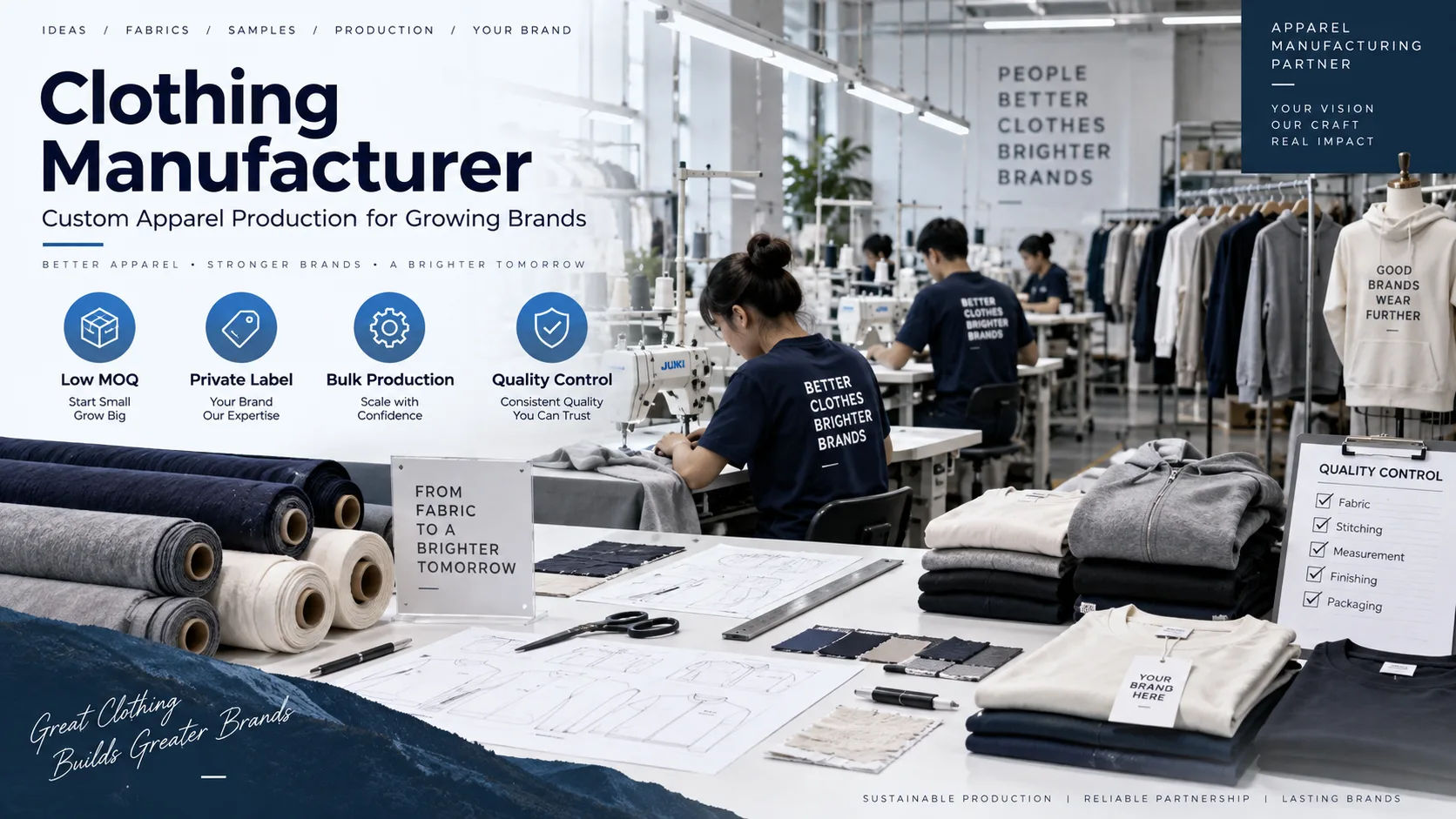
A small batch may be produced differently from thousands of shirts for a clothing brand.Understanding how shirts are made can help you choose the right manufacturer, ask better questions, and avoid problems with quality, sizing, colors, or delivery.
What Is a Custom T-Shirt Manufacturer?
A custom t-shirt manufacturer is a company that produces shirts according to a customer's specifications rather than simply selling ready-made garments.
Customers may provide their own artwork, logo, measurements, fabric preferences, colors, labels, packaging requirements, or complete clothing designs. The manufacturer then turns those specifications into physical products.
Some manufacturers handle the entire process in one facility. Others specialize in certain stages, such as garment production, screen printing, embroidery, or finishing.
For larger clothing brands, the process can involve multiple production partners. A manufacturer may produce the blank shirts while another company handles printing, labeling, or packaging.
The Main Stages of T-Shirt Manufacturing
Although production methods vary, most custom shirts pass through a similar sequence.
1. Design and Product Planning
The process usually begins with a design.
The customer decides what the shirt should look like, including its color, fit, fabric, artwork, logo placement, neckline, sleeve style, and other details.
A manufacturer may receive a finished technical drawing or simply an initial concept. When the design is not production-ready, the manufacturer's technical team may help convert it into specifications that can actually be manufactured.
This stage is important because small design decisions affect the rest of production.
For example, a large front graphic may require a different printing setup from a small chest logo. A fitted shirt may also require different patterns from a loose or oversized style.
2. Choosing the Fabric
Fabric has a major influence on how a shirt looks, feels, performs, and lasts.
Cotton is one of the most common choices because it is comfortable and breathable. Polyester is often selected for sportswear because it handles moisture and repeated use differently from cotton.
Blended fabrics combine characteristics from multiple fibers.
The manufacturer also considers fabric weight. Lightweight material may be suitable for warm weather, while heavier fabric can provide a more structured appearance.
Other considerations include softness, stretch, shrinkage, color consistency, durability, and how well the fabric works with the selected decoration method.
3. Creating the Pattern
Once the product specifications are established, the manufacturer develops a garment pattern.
A pattern is essentially a set of shapes that tells the production team how different pieces of fabric need to be cut.
For a basic t-shirt, these pieces may include the front, back, sleeves, and neck ribbing.
The pattern also determines important measurements such as chest width, body length, sleeve length, shoulder width, and neckline dimensions.
For multiple sizes, the original pattern is graded to create the appropriate measurements for each size.
Accurate pattern development matters because a shirt can have excellent fabric and printing but still feel poorly made if the proportions are wrong.
Making a Sample Shirt
Before large-scale production begins, manufacturers commonly produce a sample.
The sample gives the customer an opportunity to inspect the actual product rather than relying entirely on digital drawings or specifications.
The customer can check the fabric, color, fit, stitching, print placement, artwork size, neckline, sleeves, and overall appearance.
If something is wrong, adjustments can be made before production moves forward.
This step can prevent expensive mistakes. Changing a pattern after producing thousands of garments is considerably more complicated than correcting one sample.
Why Sampling Matters
A digital design cannot always show how a physical shirt will behave.
Fabric may drape differently than expected. A printed graphic may appear larger or smaller on the finished garment. A neckline may need adjustment, or the sleeve proportions may not look right when worn.
A sample exposes these issues early.
For custom clothing orders, approving the sample is often one of the most important checkpoints in the entire manufacturing process.
Preparing the Fabric for Cutting
After the design and sample are approved, the manufacturer prepares the fabric for bulk production.
Large quantities of fabric may be inspected before cutting. Workers or automated systems look for obvious defects, inconsistent color, holes, or other problems.
The fabric is then laid out in multiple layers.
This process is known as fabric spreading. The layers need to remain properly aligned so the pieces can be cut accurately.
The number of layers depends on the manufacturing setup, fabric characteristics, and order size.
Cutting the T-Shirt Pieces
Once the fabric is positioned, the manufacturer cuts it according to the approved patterns.
Modern factories may use computerized cutting systems for greater precision, especially when producing large quantities.
Efficient cutting is important because fabric represents a significant part of garment production costs.
Manufacturers try to arrange pattern pieces efficiently to reduce waste while still maintaining correct grain direction and garment quality.
After cutting, the individual pieces are sorted according to size, color, and production requirements.
Each group must remain organized so that the correct pieces reach the sewing section.
Printing the Custom Design
If the shirt includes artwork, printing can happen at different points depending on the manufacturing process.
The most suitable printing method depends on the design, fabric, number of shirts, colors, and expected finish.
Screen Printing
Screen printing is widely used for larger orders.
Ink is pushed through a prepared screen onto the fabric. Different screens can be used for different colors in the artwork.
It can produce strong, durable prints when the process is properly controlled.
However, complex artwork with many colors can require additional preparation.
Direct-to-Garment Printing
Direct-to-garment, or DTG, printing uses specialized equipment to apply ink directly to the shirt.
It can work well for detailed artwork, photographs, and designs with many colors.
It is particularly useful for certain smaller production runs where traditional screen setup may not be economical.
Heat Transfer Printing
Heat transfer methods apply a printed or cut design to the garment using heat and pressure.
This approach can be useful for names, numbers, logos, and certain custom graphics.
The quality depends heavily on the transfer material, equipment, temperature, pressure, and application process.
Embroidery
Not every custom shirt uses printing.
Embroidery uses thread to create a raised design directly on the garment. It is commonly used for company logos, uniforms, and premium-looking apparel.
The artwork first needs to be converted into a format suitable for embroidery equipment.
Very fine details may need to be simplified because thread behaves differently from ink.
Sewing the Shirt Together
After cutting and any required decoration, the garment pieces move to sewing.
Different machines and stitching techniques are used for different sections of the shirt.
The front and back panels are joined, sleeves are attached, and the neckline is finished. Seams are then checked for strength and consistency.
A production line may divide these tasks among multiple workers, with each person responsible for a particular operation.
This approach allows large quantities to be produced efficiently.
Stitching and Construction Quality
Good construction is more than simply making the pieces fit together.
The manufacturer needs to maintain consistent seam allowances, stitch density, tension, and alignment.
Poor stitching can result in loose seams, uneven hems, puckering, or premature damage after washing.
For this reason, experienced production teams monitor sewing throughout the manufacturing process rather than waiting until the end.
Adding Labels and Other Details
Custom clothing may require more than artwork.
A brand might request a printed neck label, woven label, size label, care label, hangtag, or special packaging.
These details are normally added after the main garment has been assembled.
Label placement must be consistent across the entire order.
Care labels are particularly important because they provide information about washing, drying, ironing, and other garment-care requirements.
Washing, Finishing, and Pressing
Some garments undergo additional finishing processes before they are packed.
Depending on the product, finishing can include washing, softening, pressing, trimming loose threads, or applying other treatments.
Pressing helps remove wrinkles and gives the garment a cleaner appearance.
Loose threads and minor imperfections are also removed during finishing.
For certain fashion products, washing may intentionally create a particular texture, softness, fade, or appearance.
Quality Control
Quality control is one of the most important parts of manufacturing.
A manufacturer needs to make sure the finished shirts match the approved specifications.
Inspectors may check measurements, fabric quality, stitching, color, print placement, labels, and general appearance.
They may also look for stains, holes, damaged seams, printing problems, or other defects.
For large orders, quality control can happen at several points instead of only after everything has been produced.
This makes it easier to identify problems before they affect the entire batch.
Checking Measurements
Garment measurements can vary slightly during manufacturing.
Quality teams compare finished shirts against the approved size specifications.
For example, they may check chest width, body length, sleeve length, shoulder measurements, and neckline dimensions.
Acceptable tolerances are normally established in the production specifications.
This is especially important for brands selling shirts online because inconsistent sizing can lead to customer complaints and returns.
Packing the Finished Shirts
Once the garments pass inspection, they are prepared for delivery.
The shirts may be folded, tagged, placed in individual bags, sorted by size, and packed into cartons.
Packaging requirements depend on the customer.
A clothing brand may require specific folding methods, barcode stickers, packaging materials, or carton labeling.
For retail orders, accurate packing is essential because products need to arrive organized and ready for distribution.
What Affects the Cost of Custom T-Shirt Manufacturing?
Several factors influence the final manufacturing price.
Fabric choice is one major factor. Premium or specialized fabrics generally cost more than basic materials.
The number of shirts also matters. Larger orders can spread setup and production costs across more garments.
Design complexity can affect printing expenses. Multiple colors, large graphics, specialty inks, embroidery, or unusual placements may require additional work.
Garment construction also influences cost. A simple t-shirt is generally easier to manufacture than a highly customized garment with unusual panels, stitching, trims, or finishing requirements.
Packaging, labels, shipping, and quality-control requirements can also contribute to the final cost.
How Long Does T-Shirt Manufacturing Take?
Production time varies significantly.
A simple repeat order may move quickly because the pattern, materials, and decoration specifications already exist.
A completely new product usually takes longer because it requires design development, sampling, revisions, material sourcing, and production planning.
The order quantity also affects the timeline.
Before placing an order, it is sensible to ask about sample time, production time, quality inspection, packaging, and shipping separately. The total timeline is more than the number of days spent sewing the shirts.
How to Choose the Right Manufacturer
Choosing a manufacturer should involve more than comparing the lowest price.
Look at the manufacturer's experience with your type of product.
Ask about minimum order quantities, sample development, fabric options, decoration methods, production capacity, quality control, and lead times.
It is also useful to understand how the manufacturer handles problems.
A reliable production partner should be able to explain what happens if fabric is unavailable, a sample needs changes, or some finished garments fail inspection.
Clear communication is valuable throughout the process.
Common Problems That Can Occur During Production
Custom shirt manufacturing is a detailed process, so problems can happen.
Color differences may occur between fabric batches or between a digital design and the finished print.
Shrinkage can affect garment measurements if the fabric has not been properly tested or accounted for.
Printing can also produce issues such as cracking, poor adhesion, incorrect placement, or inconsistent color.
Sewing problems may include uneven seams, skipped stitches, loose threads, or incorrect measurements.
Most manufacturing problems are easier to correct when they are identified during sampling or early production rather than after the entire order has been completed.
Conclusion
A custom t-shirt manufacturer does much more than put a logo on a blank shirt. The process begins with product planning and fabric selection, followed by pattern development, sampling, cutting, printing or embroidery, sewing, finishing, inspection, and packaging.
Every stage can influence the final result. A high-quality fabric cannot compensate for poor construction, and an attractive design will not look professional if it is printed incorrectly or positioned inconsistently.
For customers ordering custom apparel, understanding this process makes it easier to set realistic expectations and communicate effectively with manufacturers. Instead of judging a supplier only by price, consider its sampling process, material options, production capabilities, quality controls, communication, and ability to consistently reproduce the approved design.
The best manufacturing results usually come from clear specifications and careful checks at each stage. When the design, materials, construction, decoration, and quality standards are properly coordinated, the finished shirt can look professional, fit correctly, and perform well through repeated wear and washing.